You might know Mauritius as a paradisiac island surrounded by turquoise lagoons and luxurious resorts. But there’s so much more to the country. In this article we’ve compiled fun facts about Mauritius that you might not know, with insights from a local (me).
If you’re looking for a place to stay, check out the best eco hotels in Mauritius.
And check out this incredibly detailed list of all the things to do in Mauritius, organised by area.
Quick facts about Mauritius
Here are the basics:
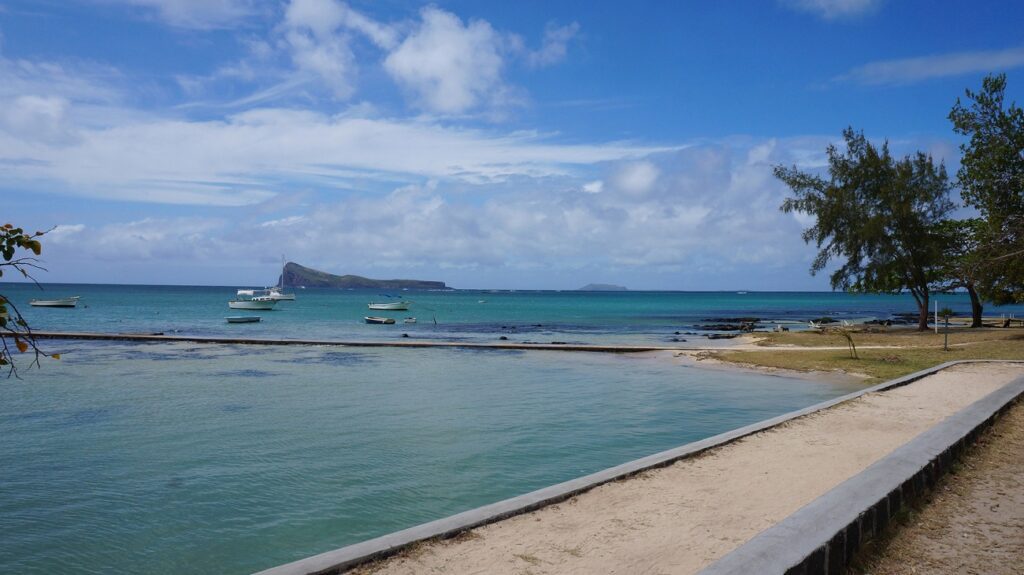
- Mauritius is just one island and not an archipelago of islands like the Maldives, although it does have small islets around it that you can take a boat ride to. The islets are tiny and uninhabited, but one (Iles aux Cerfs) has a bubble hotel there
- Capital city: Port-Louis
- Currency: Mauritian rupee (not the same as Indian rupee)
- People: Mauritians
- Population: 1.26 million
- Life expectancy: around 73 years, which is pretty high among developing nations
- Pronounced “Mo-ri-shee-us” in English. In French, it’s Île Maurice
- Official language: there is no official language, but everyone speaks creole. Most people also speak French and English. English is the language of business, but rarely used on a regular, informal basis. Minority languages include: Urdu, Hindi, Bhojpuri, Mandarin, Haka
- Main religions: Mauritius is a secular country, but the main religions are Hinduism, Christianity, Islam (minority religion: Buddhism)
- Literacy rate: 91.3 %
- Main sports: football (aka soccer for our American friends), badminton, volleyball, boxing, judo, karate, and various water sports (swimming, sailing, snorkeling, and scuba diving). Golf is a big attraction for tourists
- Driving: on the left.
- Public transport: Public transport is readily available in the form of buses and a metro line, and they work quite well. But if you want to see every corner of the island or visit remote spots, it’s best to rent a car.
Geography of Mauritius
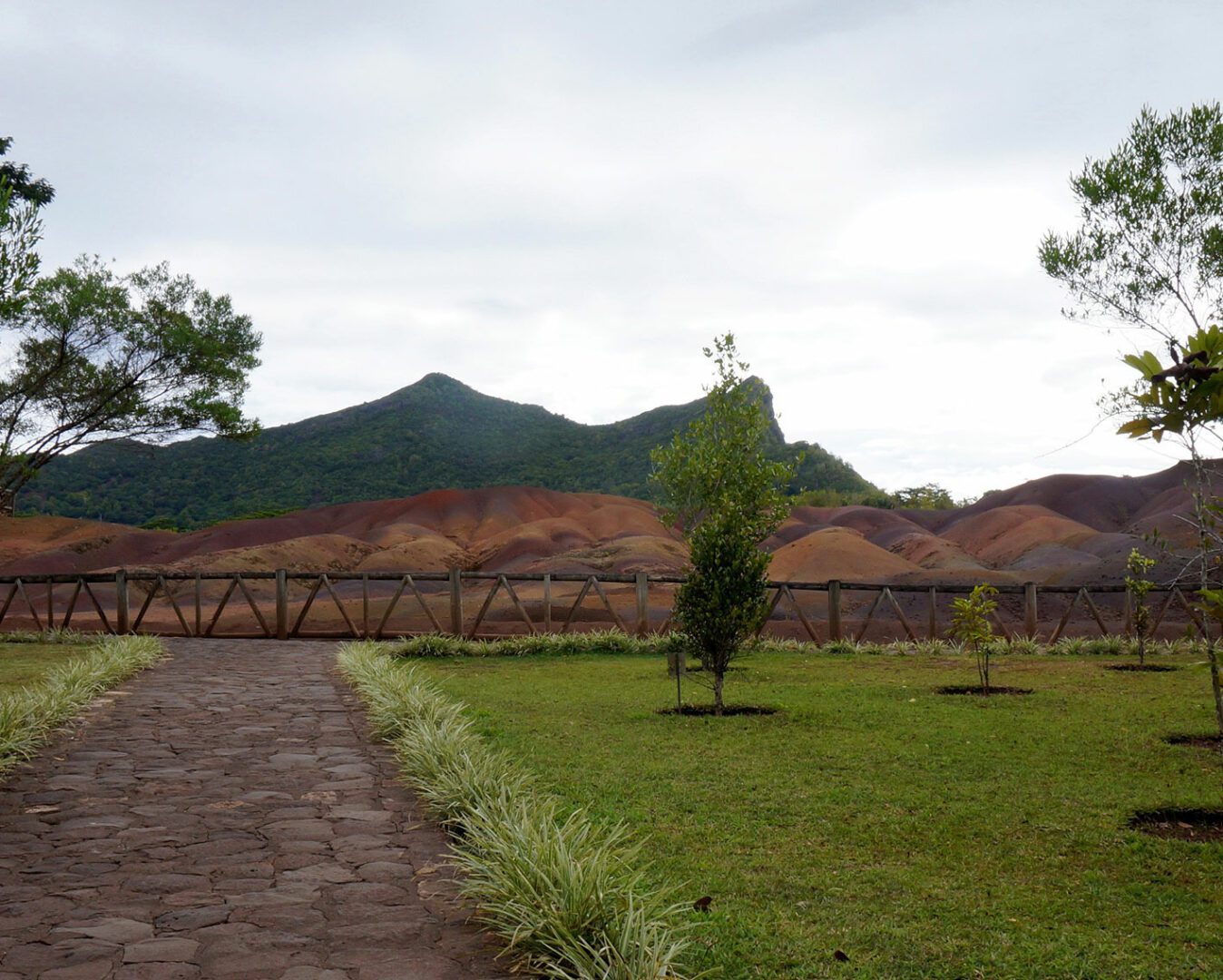
- Formed from a volcanic eruption under the sea
- Summer: November-April; winter: May-October
- Size: 2040 km² or 788 sq miles (40 miles by 28 miles/65 km by 45 km)
- Coastline: 110 miles (177 km)
- There are discontinuous mountain ranges encircling the central plateau (middle part of the island).
- Highest point: 2716.54 ft (828 meters)
- Trade winds blow from the south east, and directly affect the climate: the eastern part and southern part of the island receive cool wind year-round, with some rain, while the northern part of the island is protected by the mountains.
- There are small islets around Mauritius, ideal for scuba diving and snorkeling.
- Natural hazards: cyclones in summer; anti-cyclones in winter. They bring wind and rain, and rarely cause major damage.
- Thanks to the coral reefs surrounding the island, Mauritius has beautiful, calm sandy-white beaches, especially in the Northern part of the island.
- The island is divided into 9 districts.
Historical Facts about Mauritius
- 10th century: Arabs discovered the island
- 16th century: Portuguese visited. Dutch colonised Mauritius. Ruler: Prince Maurice Van Nassau (namesake of Mauritius). Destruction of ebony forests; extinction of the dodo bird.
- 1710: the Dutch left
- 1715-1810: the French came, built Port-Louis, the Government House, and Line Barracks. Mauritius was “Île de France” under French rule.
- 1810: British invaded but lost (the only naval battle won by Napoleon). Three months later, they invaded again and won.
- 1814: The French agreed on handing Mauritius over to the British, but with a compromise known as the Treaty of Paris: the population was to keep the language, religions, laws of the French.
- 1835: Slavery abolished; labourers brought from India and China
- 1968: Independence of Mauritius
- 1992: Mauritius became a Republic
Mauritius economy
A long time ago, Mauritius depended on sugarcane as its main economic gain, and exported sugar to various countries.
Today, there are 3 other important industries that contribute to the economy:
- Tourism
- Textile
- Service sector
Cultural facts about Mauritius
Often called a “rainbow nation” due to its diverse population and multicultural aspect, Mauritius has influences from Africa, France, India, and China. The heterogeneous population consists of
- 68% Indo-Mauritians (of Indian descent)
- 27% Creole (mixed African and European heritage)
- 3% Sino-Mauritians (of Chinese descent)
- 2% White (Europeans and South African immigrants)
In Mauritius, you will find French cuisine infused with African elements; Chinese food with a touch of Mauritius flavour and spices; snacks, cookies, and chocolates from South Africa, UK, France, Malaysia, and Australia; street food with Indian influences; French pastries; Portuguese and Dutch croquettes; and a few Mauritian inventions.
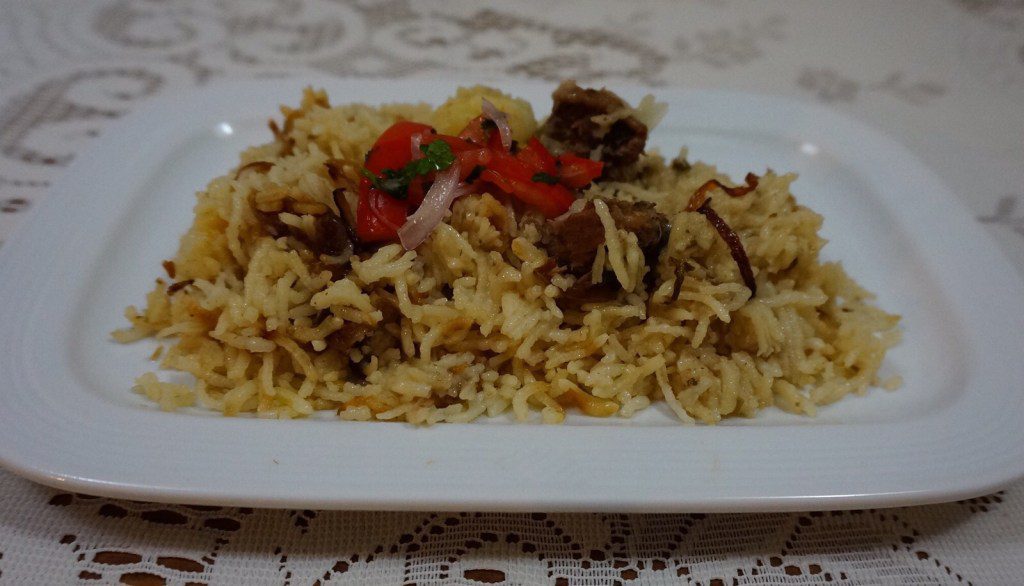
This mix of cuisine is reflected in society as well, where you will find neighbours of different ethnic and cultural backgrounds living peacefully next to each other and sharing treats from their religious celebrations.
Séga music and dance
Mauritius has its own unique music called Séga. It is considered the national music of Mauritius, and is not appropriated by any particular ethnicity. It is a rhythmic, lively music which originated from African slaves in Mauritius, as a way to dispel their sadness and misery. Séga is almost always sung in creole.
There are only 3 instruments needed to produce the séga music: the ravanne, the maravanne, and the triangle. The ravanne is a tambourine-like instrument, used for drum beats. It is made out of goat skin. The maravanne is a rattle, and the triangle is a bar of metal shaped into a triangle.
Interestingly, the dance that goes along with the music is also called Séga. The main movements consist of shuffling the feet and swaying the hips, usually simultaneously (it’s a lot harder than it sounds).
Seggae is another type of Mauritian music which is a fusion of reggae, Séga, and Indian beats. The late singer Kaya created seggae because he loved Bob Marley’s music. Kaya was an activist for the Creole population, but loved by all. Listen to one of Kaya’s most popular songs here.
Fauna and Flora of Mauritius
Fauna
The dodo bird
The dodo is widely known throughout the world, and yet many don’t know that it was endemic to Mauritius, i.e. it did not exist anywhere else.
It was a flightless bird that is now extinct, and it was flightless for a number of reasons:
- It weight about 10-18 kg (22-40 lbs), which is quite heavy for a bird.
- Its lack of fear of humans and other predators due to Mauritius being uninhabited prior to colonisation.
- Its diet consisted mostly of fruits and seeds from fruits, readily available on the ground.
The dodo bird became extinct because of human exploitation and introduced species such as dogs and rats, which ate the dodo eggs.
Other birds of Mauritius
Mauritius has a low diversity of wildlife due to isolation; there were no mammals and no amphibians prior to colonisation.
However, there is a number of endemic birds in Mauritius, such as:
- Pink Pigeon
- Mauritius Parakeet
- Mauritius Kestrel
Flora
Green land makes up 85% of Mauritius, and there are about 335 endemic flowering plants on the island. The national flower is the Trochetia Boutoniana, also known as Boucle d’Oreille, which means earring, due to its bell-shaped look.
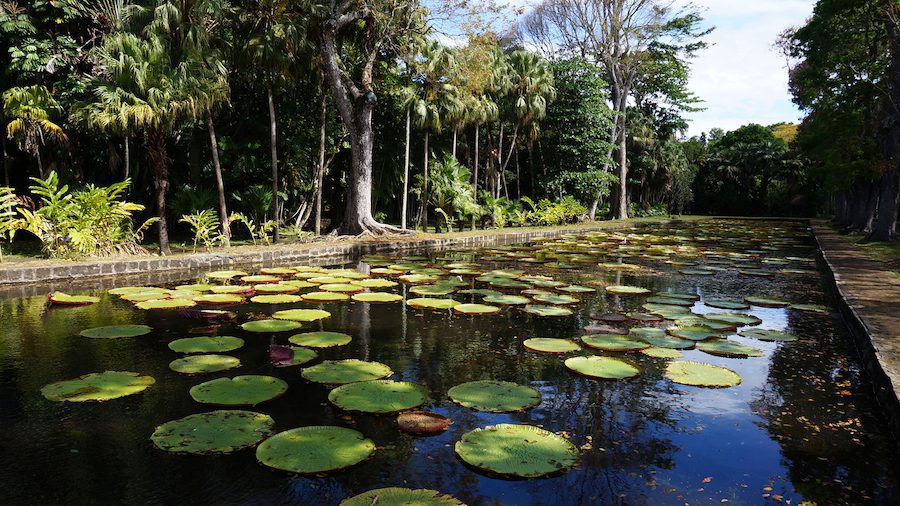
The Botanical Gardens is home to giant water lilies, as well as the Talipot palm tree which is a tree that dies after a single flowering, that occurs once between 30 to 80 years.
And there you have it. We hope that these facts about Mauritius gave you some insights about this beautiful country.
Don’t forget to check out the best eco hotels in Mauritius.