
My friends over at Unchained Elephants are dedicated to the conservation and welfare of elephants, and I am honoured to be able to share their story of their first elephant rescue in Thailand.
In the meantime, check out the definition of ecotourism and sustainable travel, and get your free sustainable travel guidelines and tips.
Hi Susan! Can you tell us a bit about yourself and the work you do with elephants in Thailand?
Hey! Thanks for covering our story on our first elephant rescue in Thailand. My name is Susan, and I’m half Thai, half Finnish. I’m the Project Director of Unchained Elephants, responsible for managing operations and the legal aspects of the project.
Before Unchained Elephants, my husband and I ran a marketing agency here in Thailand called E-Media Asia, with a focus on the travel industry. However, when the pandemic hit, our business suffered a major setback.
That’s when we decided to pivot, and in 2020, we created coffeeculture.asia, a coffee marketplace to promote and sell roasted coffee from local roasters & farmers in Thailand. A year later, we launched Unchained Elephants.
Tell us about your organisation, Unchained Elephants?
Unchained Elephants was born in 2021 with a singular mission: to aid elephants that were suffering due to the global impact of the pandemic on tourism. The livelihood of these elephants was severely affected as they found themselves “unemployed,” spending their days chained up and lacking sufficient food. In response, we initiated a fundraising campaign that successfully raised $4,000. These funds provided food for eight elephants in three different camps for nearly two months. It was a huge milestone for Unchained Elephants.
However, with the recovery of tourism and the return of travellers to Thailand, we noticed a bigger issue. Elephants were once again “employed” and were subjected to harsh and abusive conditions in the entertainment industry. Unchained Elephants aims to rescue these working elephants from their harsh circumstances and relocate them to a safe haven where they can live freely and be cared for in a responsible manner.
While these rescues may not eliminate the root of the problem in the elephant tourism industry, we believe that they serve a dual purpose.
- Firstly, these rescues provide immediate relief to elephants suffering under harsh conditions.
- Secondly, it provides an opportunity to raise awareness about the cruelty these elephants endure.
We strongly believe that the key to creating a lasting impact on elephant welfare is through education. Which is why Unchained Elephants was founded with a dual focus: rescuing elephants and raising awareness, and educating travellers about elephant tourism, all while giving back to our supportive community when people visit Thailand.
What made you decide to co-found Unchained Elephants?
A childhood experience has been the driving force behind my co-founding of Unchained Elephants. When I was a small child, my mother took me for an elephant ride, an experience that left a lasting impact on me. We were assigned to ride an elephant that was a new mother with a young calf.
What transpired was a distressing experience, one that has left a deep scar on my memory. The mother elephant was heavily beaten to separate her from her baby, all to meet the demands of the tourism industry. This experience made me aware of the hidden and disturbing activities that often occur behind the scenes, that many travellers do not know about, not even the locals.
Unchained Elephants is my way of addressing the cruelty these elephants face. It’s a project with a mission to not only rescue these majestic animals but also to educate travellers about elephant tourism, all while building a supportive community dedicated to making a positive impact. I strongly believe that Unchained Elephants can play a significant role in improving the welfare of elephants in Thailand through education.
Tell us about your first elephant rescue operation in Thailand.
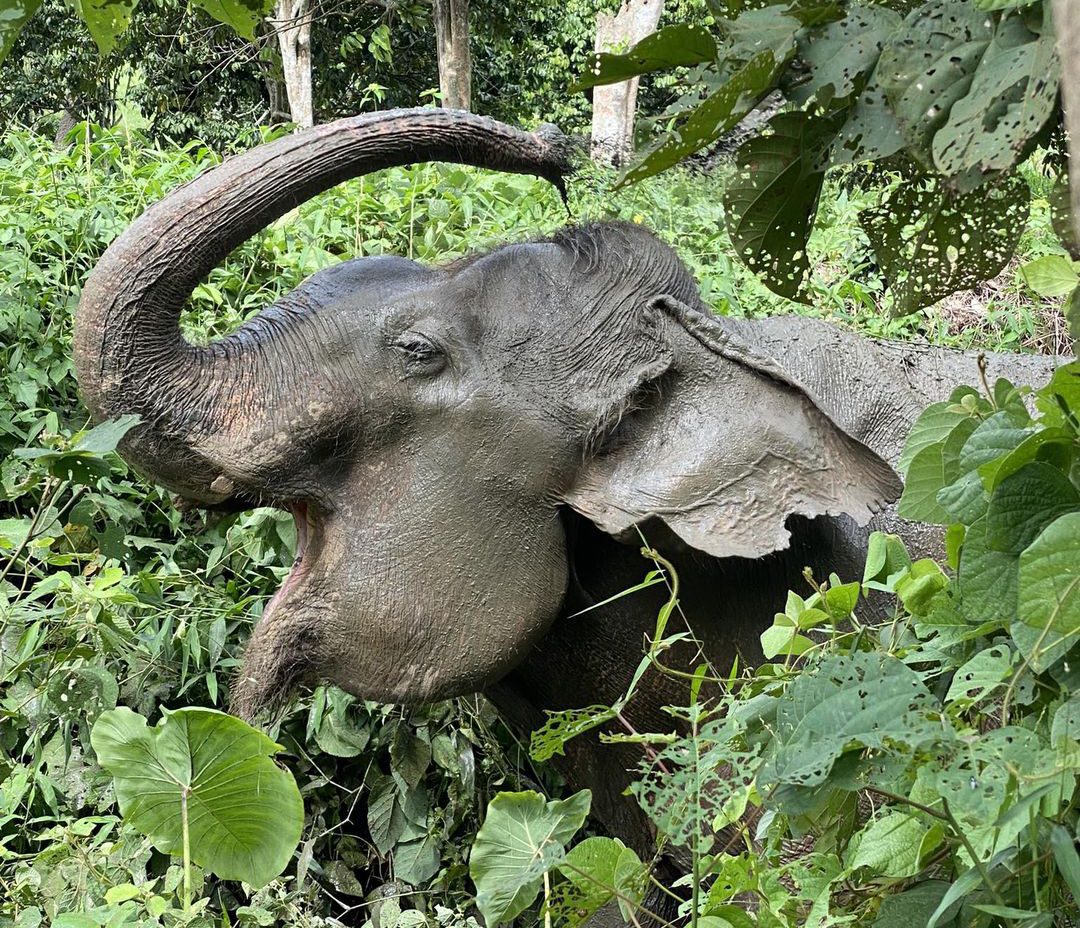
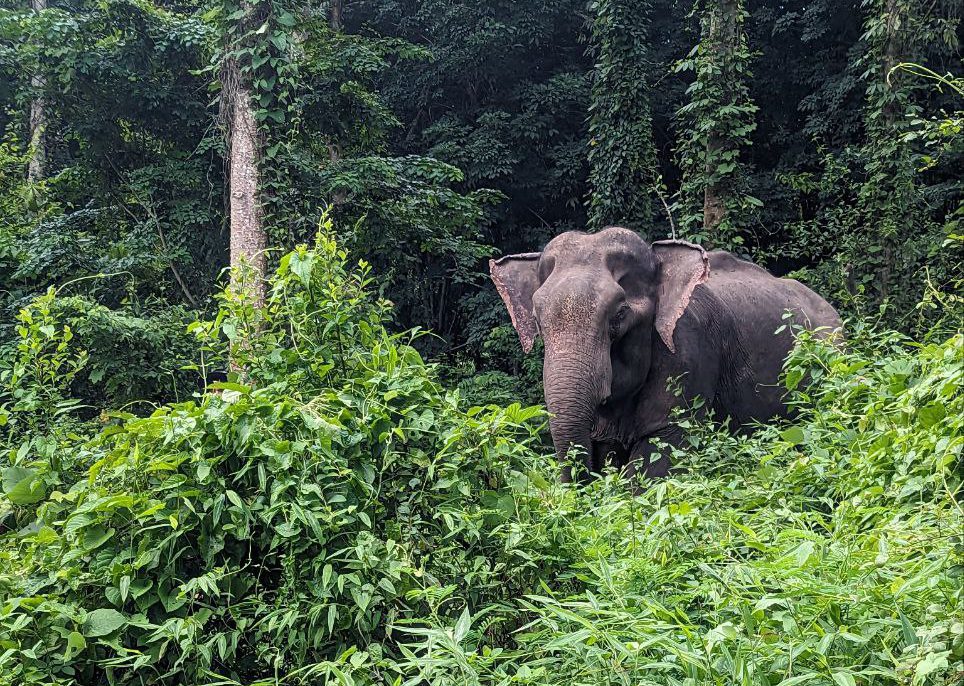
The goal of our elephant rescue mission was to raise the funds to buy Kanoon’s freedom, and relocate him to BLES, an ethical elephant sanctuary in Sukhothai with a hands-off policy (no touching, bathing, or feeding their rescued elephants). It was an incredibly surreal experience, one that will stay with me forever. However, our first ever elephant rescue mission in Thailand was far from smooth, and we encountered many challenges, though some things did go better than anticipated.
It all began when an animal activist reached out to us to rescue an elephant in Thailand. But when we presented Kanoon’s case to them, they turned it away because they didn’t believe the story was captivating enough – they wanted a baby elephant. So we decided to take matters into our own hands and do whatever it takes to save Kanoon.
Kanoon is an old bull elephant, and had endured four brutal years in captivity in Chiang Mai. Chained next to a garbage dump, he had scarce food and only one functioning eye, making his life a tale of suffering.
Initially we could not find a sanctuary willing to provide a home for Kanoon because male (bull) elephants require special facilities and care, and come with distinct behaviour and characteristics that make them difficult to care for.
We also had to deal with unexpected trash being dumped right next to where Kanoon was chained, which impacted his overall health as he was already blinded in one eye, and then got an infection on his other functioning eye.
But despite all of this, on the 14th of August 2023, at precisely 10:55 PM, we overcame them as a team and with the support of our incredible global community: we successfully gathered a remarkable 661,852 baht ($19,466) to buy Kanoon’s freedom. Without the amazing people from all over the world, we wouldn’t have been able to make this elephant rescue happen, and we are so thankful. And we managed to find a sanctuary willing to take him.
So on September 5th 2023, we flew to Chiang Mai to carry out what was going to be our very first elephant rescue in Thailand! The entire process took us 13 hours. We were very excited but also apprehensive because Kanoon, after four years of captivity, might get overwhelmed and fearful with all the commotion, which would then pose real concerns for our safety.
The day began early in the morning. We transferred Kanoon’s records to his new caretakers at BLES, and together with them, we navigated the complexities of his transport permit (his “elephant visa”) without a hitch, ensuring the rescue continued seamlessly. As we reached Kanoon, we kept our distance from him so as to not scare him, and his mahout (caretaker) helped lead him onto the truck.
The loading process was the most daunting part. Kanoon had only been on a truck twice in his life, so we were concerned about how it would go. But he surprised us by calmly boarding, seeming to understand the significance of this journey to freedom. What could have taken 4 hours took what felt like 30 minutes!
The next challenge was to reach a quarantine checkpoint by 4.15pm, and of course there was a storm, and heavy rain poured down. We worried about how Kanoon, after four years of being chained up, would react to being transported on a truck for long hours and in heavy rain conditions.
But once again, he remained calm the whole entire way to Sukhothai. When finally we reached BLES at around 9pm, in muddy roads and rain, Kanoon’s transition from getting off the truck and to his new home went smoothly. It’s as if he knew exactly what was happening. Awaiting his arrival was a welcome buffet, donated by the community of Coffee drinkers at Coffee Culture and provided by the BLES team.
We watched as Kanoon leaned against the pole (he must have been exhausted) and slowly ate, taking up all the corn first (it seems to be his favourite food). The moment we unchained him was the best.
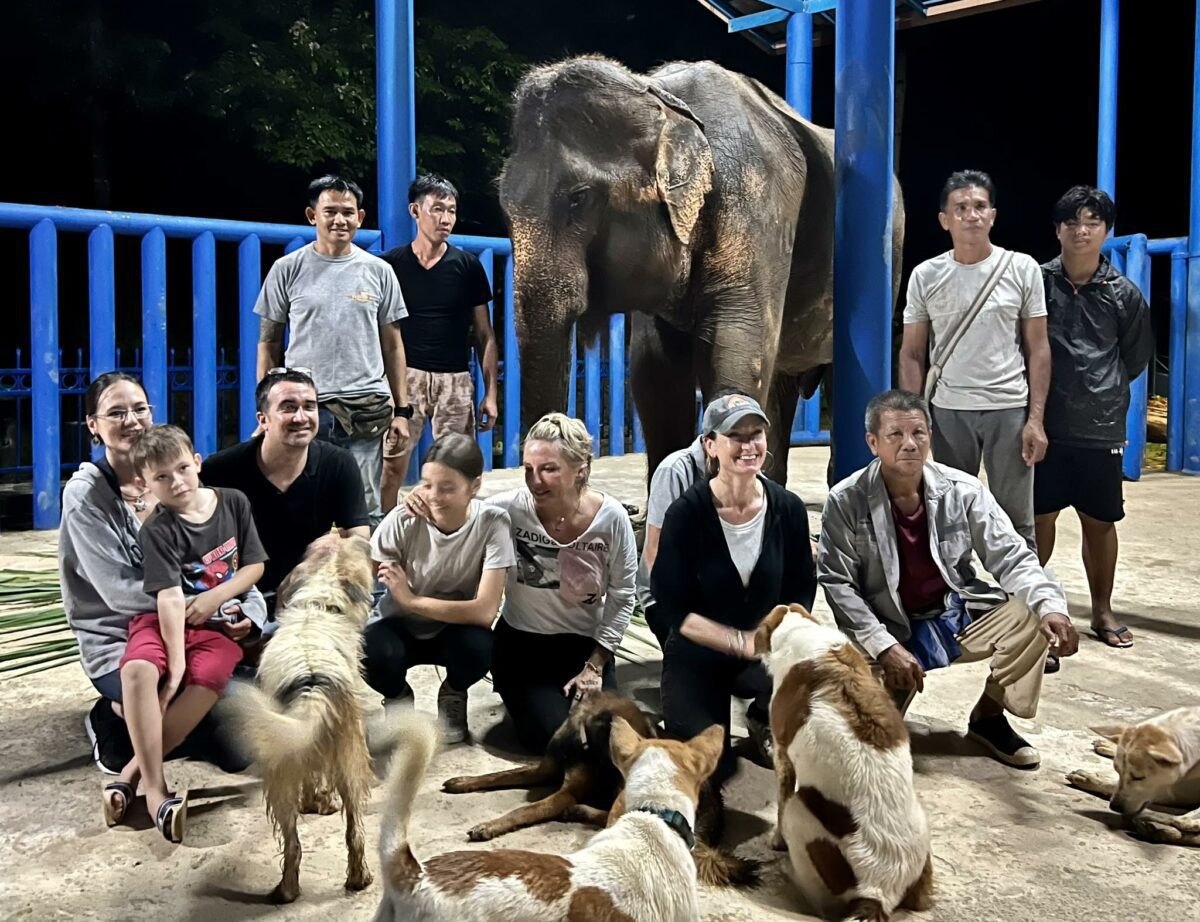
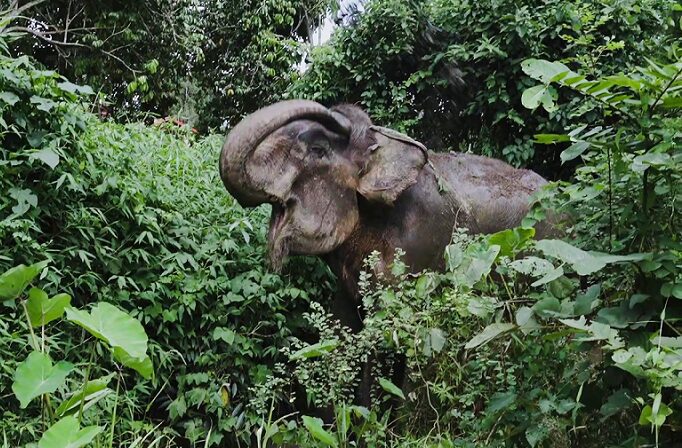
Over the next two days, we watched as Kanoon adapted to life happily at BLES. He socialised with other elephants, and enjoyed his mud bath and tree rubs. His journey to freedom is over, but his journey to recovery continues to this day.
Why is it important for people to hear this story?
We believe that everyone wants to make a difference and have a positive impact in the world, and we would when it’s made easily accessible. This story serves as proof that with everyone’s collective efforts, big or small, we can create and be the change. And this doesn’t just apply to elephants in Thailand but to any cause.
We hope to inspire people around the world to break away from their daily routines – it’s an invitation to become part of something greater than themselves, to give back, and to create a positive impact that resonates across the globe.
As tourists and travellers, how can we help elephants?
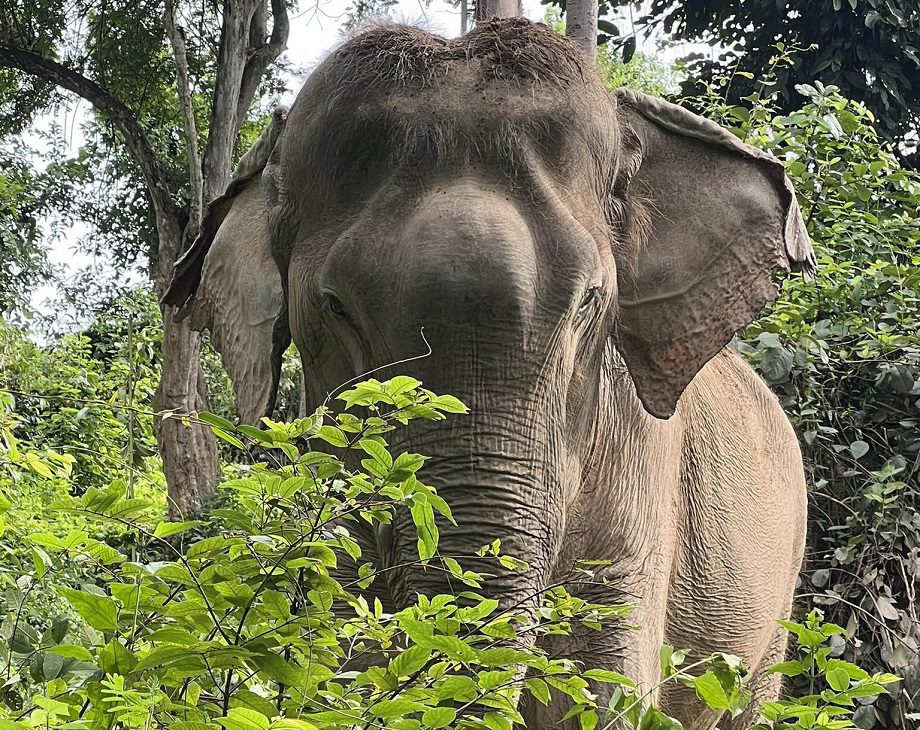
The transformation of elephant tourism lies in our hands, the tourists and travellers. It’s our demand that drives these activities, including elephant trekking, performances, and photo opportunities. Without our interest in these activities, there would be no need for these practices.
By spreading awareness and educating our friends and family about the cruelty that often occurs behind the scenes in elephant tourism, we can become the force for change that these elephants desperately need. Understanding the heartbreaking truths behind these elephant experiences is the first step. There are better ways to experience elephants where their welfare is prioritised.
We should avoid places where elephants are forced to perform tricks, where they are forced to interact with tourists for photos and baths and feeding, or places that allow big crowds to visit, regardless of space or the elephants’ welfare.
If you want to see elephants, it’s important to research the sanctuaries you plan to visit, to check if they still allow human interactions and photo ops, or if you can just observe the elephants in their natural element. Only the latter is a true ethical elephant sanctuary, because the elephants are not being forced to do anything. You can find more information on ethical elephant sanctuaries in Thailand here.
Update: Kanoon has unfortunately passed away shortly after being freed. However, Unchained Elephants continues to raise funds to free as many captive elephants as possible.