
Contrary to popular belief, Kuala Lumpur (and Malaysia in general) should NEVER just be a quick stopover on the way to more popular South East Asian cities or countries. Just sampling the variety of Malaysian food alone will take a week or more.
I lived in Malaysia for 3 years and I revisit often. Some of my favourite things to do in KL is to watch the light show at Suria KLCC with the twin towers in the background, while enjoying snacks from the mall, and admiring Islamic art and architecture at the Islamic Art Museum. Below is the full list of the best things to do in Kuala Lumpur (with insider tips) that you should not miss on your first visit, making this the perfect Kuala Lumpur itinerary for first-timers.
The best things to do in Kuala Lumpur
1. KLCC and the Petronas Twin Towers
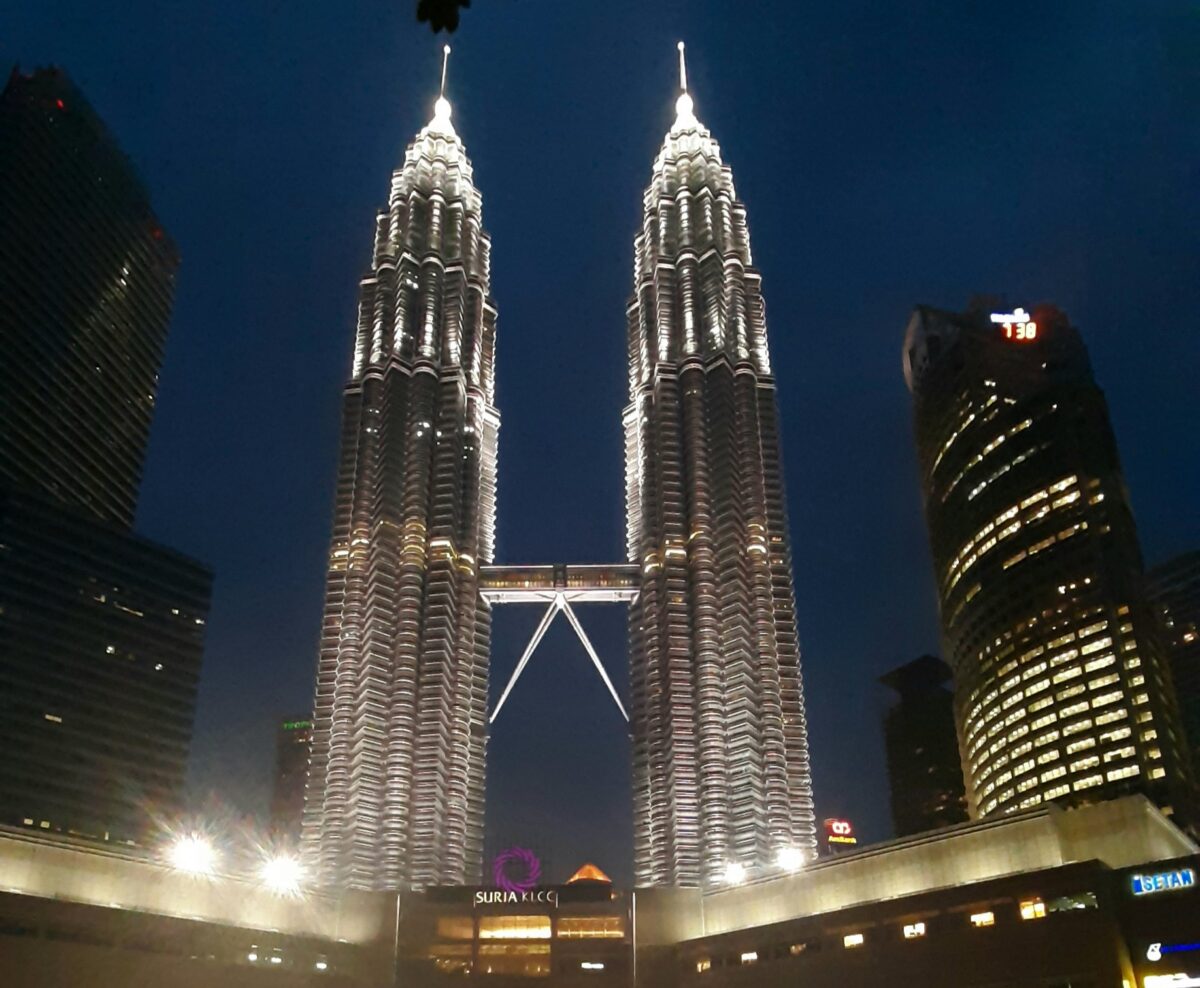
KL’s most famous landmark is undoubtedly the Petronas Twin Towers; these towers have a connecting skybridge and used to be the tallest buildings in the world, at 452 m (1482 ft). The observation deck is a popular attraction (reserve your Petronas Twin Towers tickets online in advance), but most locals hang out at the KLCC park where you can see a light show every evening.
This is also a good area to stay when visiting KL. It’s convenient and has a lot of amenities and attractions nearby, and the LRT (metro) provides efficient and clean transport.
Insider tip: KLCC is the whole area around the Petronas Twin Towers, and includes the park, the Suria KLCC shopping mall, the aquarium, and the science center. However, when locals say KLCC, they usually refer to the Suria KLCC mall and park, so if you’re asking for information about the twin towers only, you have to specifically mention the twin towers.
2. KL Tower
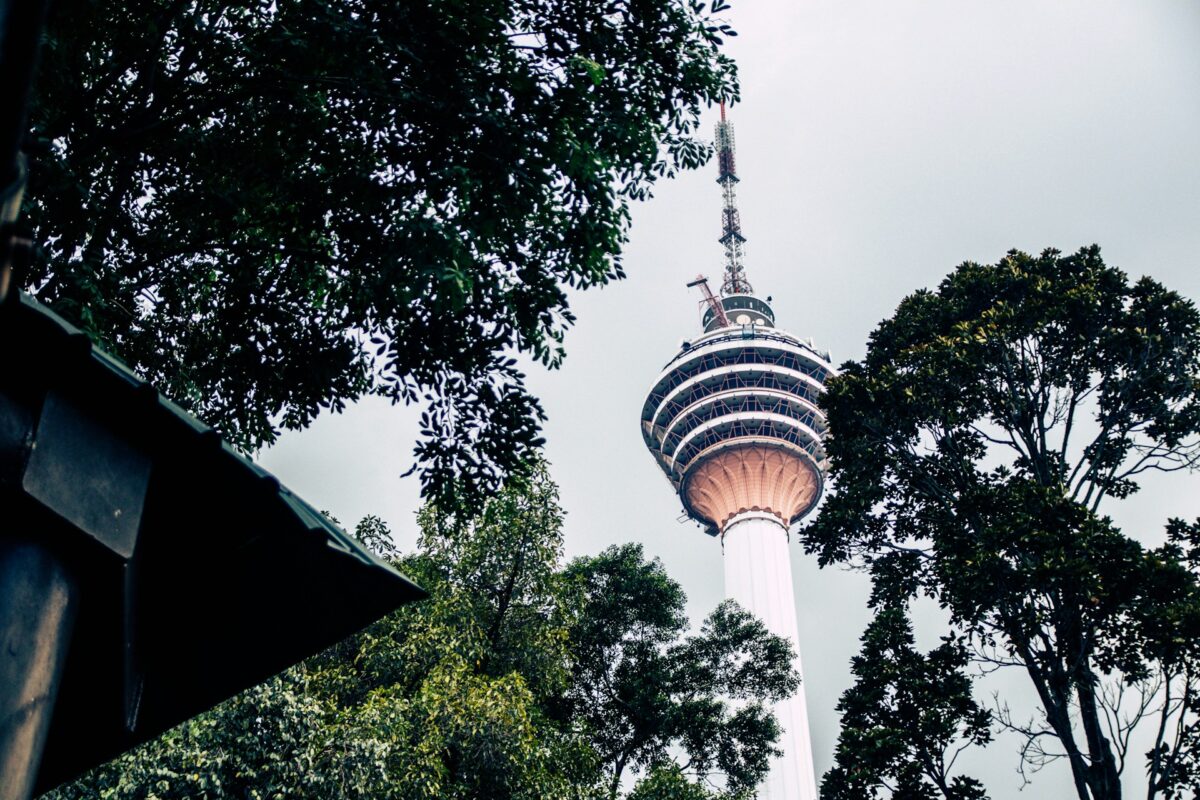
The KL Tower is also known as Menara Kuala Lumpur, and is another distinct landscape in KL, though less popular than the twin towers. It also has an observation deck, and from an even higher point than the twin towers, as it’s located on a hill.
If you want to visit the observation deck, you can choose between the Sky Deck, which offers panoramic views, or the Sky Box, which has a see-through glass as a floor and is a more adrenaline-filled experience. Or you can do both.
3. KL Forest Eco Park
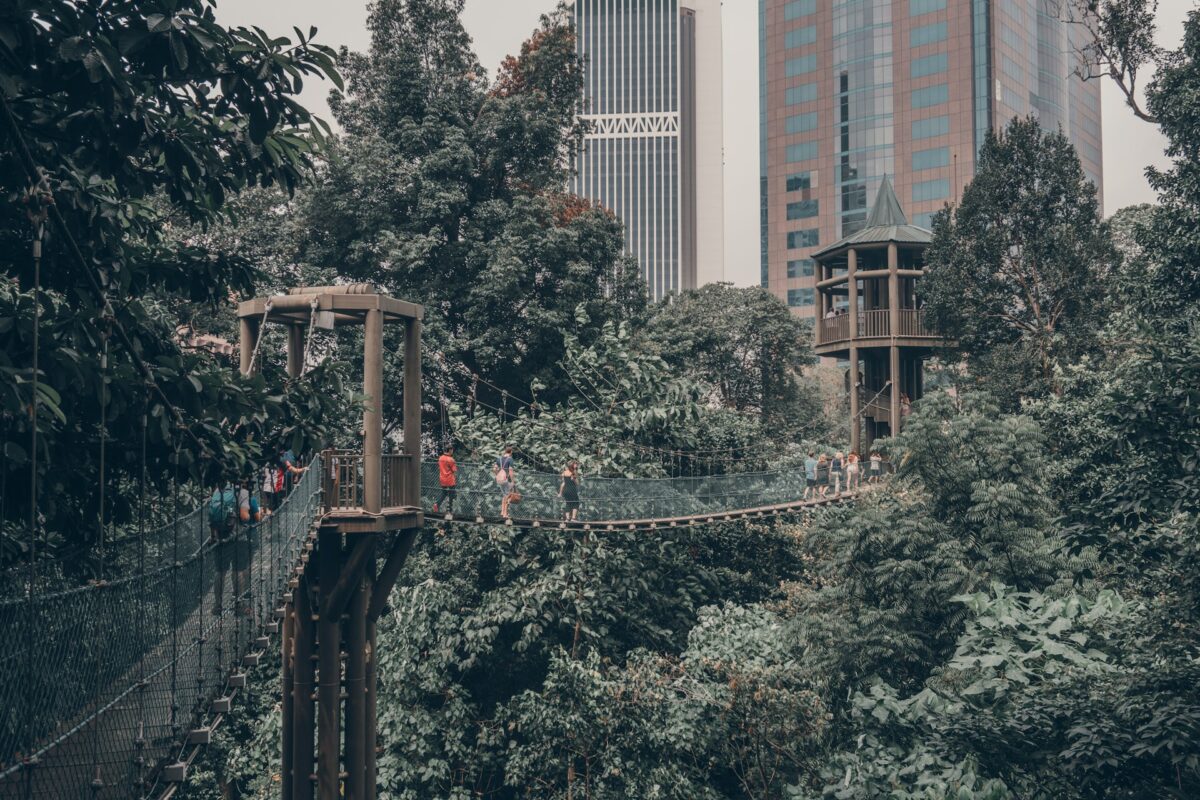
Close to the KL Tower, the KL Forest Eco Park is the perfect place to relax in a natural setting without having to leave the city. The park has a few hiking trails and canopy walkways, offering a break from the sun and heat, though it’s still likely to be humid.
Wear comfortable shoes with a good grip if you plan to explore the park properly.
4. Bukit Bintang
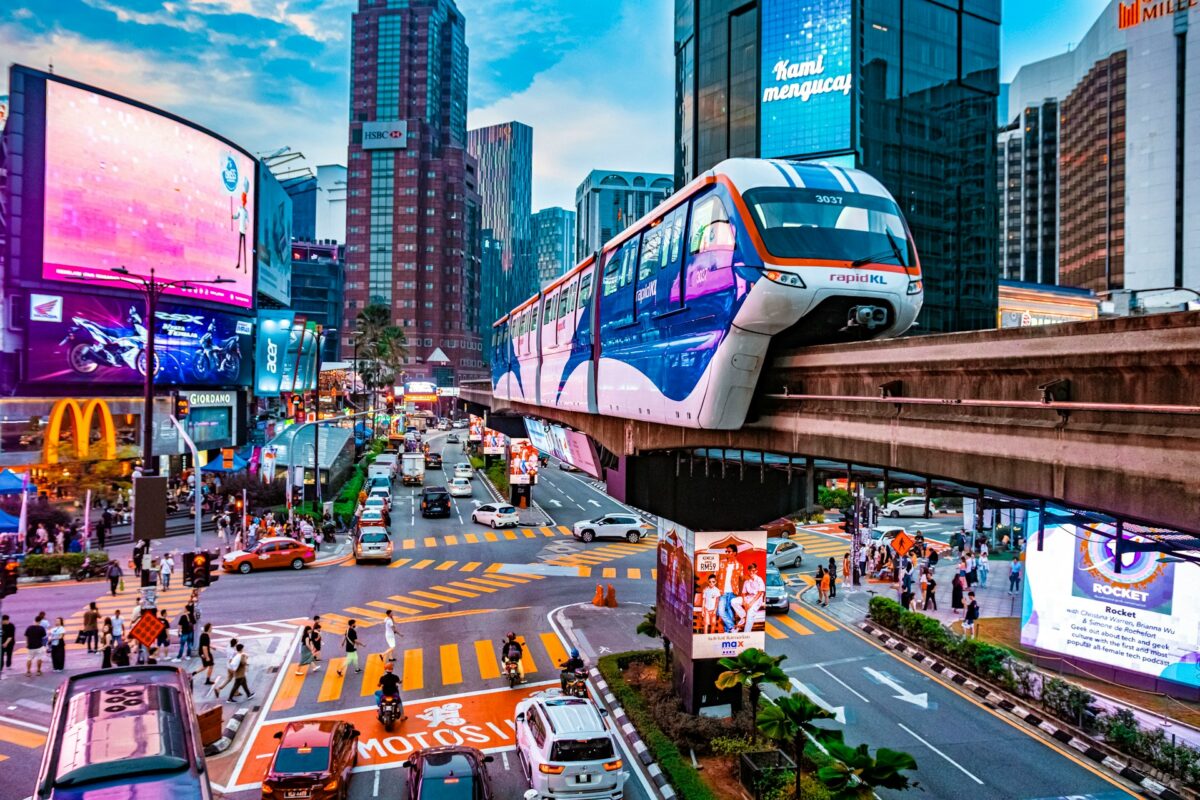
Known as the city’s entertainment and shopping area, Bukit Bintang is quite a busy spot, as aside from shopping malls, there are also plenty of restaurants and cafes. Also, many tourists go there to experience Jalan Alor (a famous street known for its night markets and local street food). You can spend all day walking around Bukit Bintang, so wear comfortable shoes.
Insider tip: If you’re going shopping, Pavilion KL has the usual generic international brands along with a few luxury options. Next door, Sungei Wang Plaza is a more budget-friendly option. For electronics, head to Low Yat Plaza.
5. Sultan Abdul Samad Building and Merdeka Square
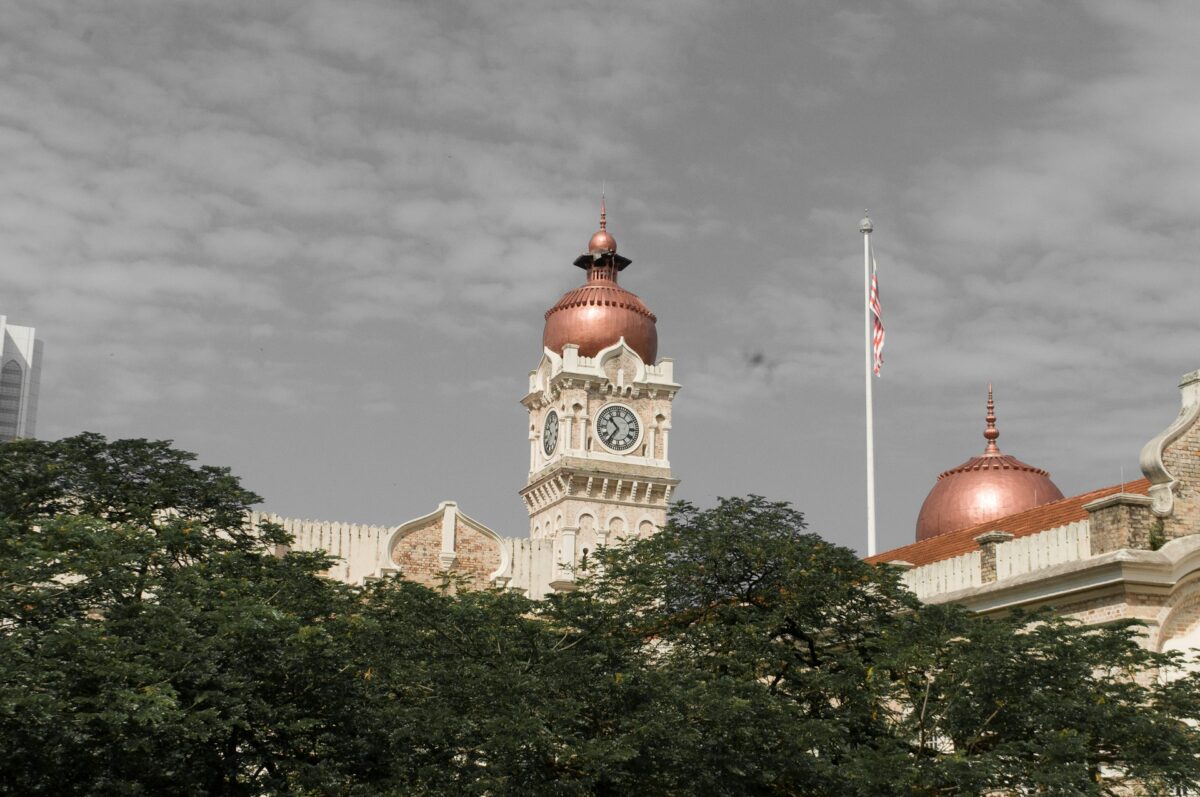
To absorb a bit of history and to see colonial buildings with British and Moorish styles, head to Merdeka Square (also called Dataran Merdeka), where Malaysia declared its independence in 1957. The Sultan Abdul Samad Building is one of the most popular landmarks, and makes for a beautiful photo with the flagpole, especially at sunset or late evenings when the square is lit up.
Insider tip: Make a day of it and explore other places nearby, like Chinatown, the Central Market, the Music Museum, and the National Textile Museum.
6. Masjid Negara, Malaysia’s National Mosque
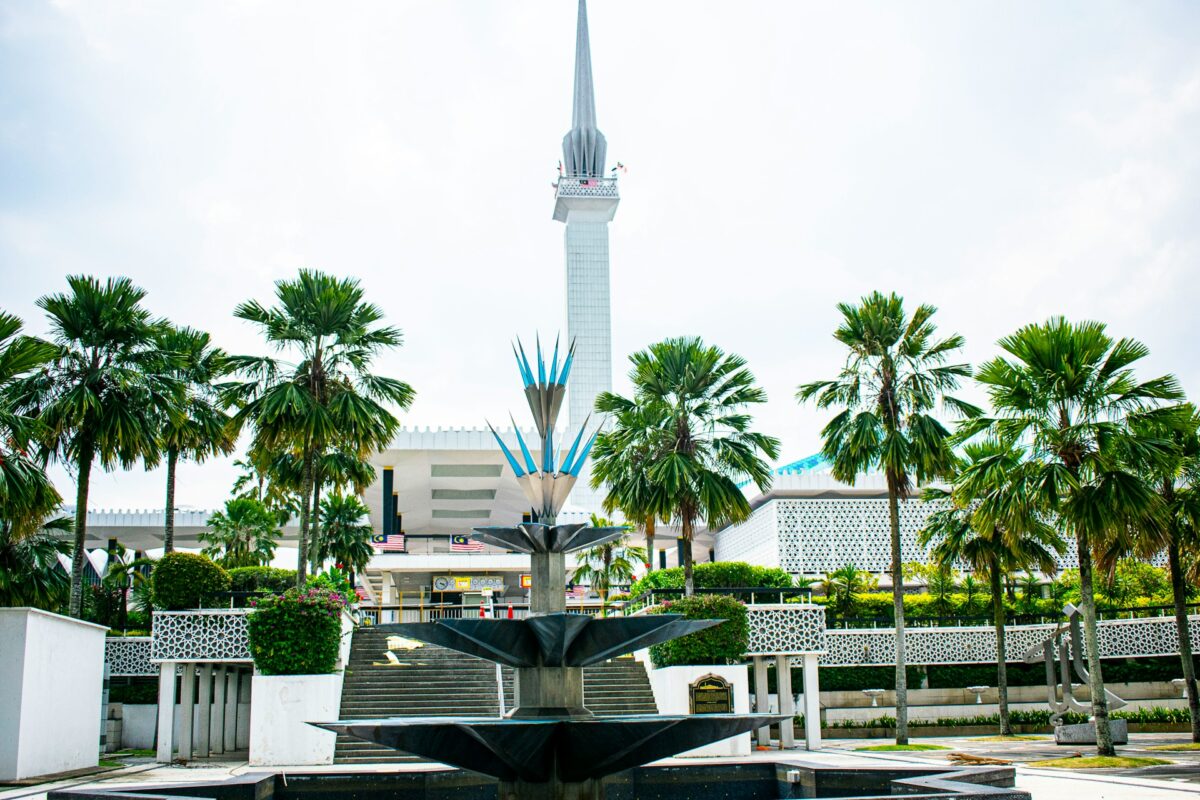
Built after Malaysia’s independence from the British, Masjid Negara is Malaysia’s National Mosque and has a unique star-shaped dome, quite different from the usual circular domes for mosques and any British architecture from that time. It’s free to visit and is open to non-Muslims visitors during designated hours, and you can get a free guided tour or just explore the surrounding gardens.
Insider tip: Dress codes apply as usual when visiting mosques: women must wear loose clothing that covers the whole body, and a head scarf.
7. Islamic Art Museum
Close to Masjid Negara is the Islamic Art Museum Malaysia, the largest museum in Southeast Asia dedicated to Islamic art, including artifacts, jewelry, ceramics, and manuscripts from the Quran, the holy book for Muslims. The building itself is also designed in Islamic architecture style, including the dome and tiles. It’s the best place to learn about Islamic tradition and influence in various parts of the world, including the Middle East, China, India, and Southeast Asia. There’s also a cafe/restaurant there serving mostly Malaysian dishes.
Insider tip: While there’s no strict dress code to visit the museum, it’s respectful to dress modestly. It is a museum about Islam after all. Also, check before taking photos as some exhibits might not allow it.
8. Perdana Botanical Garden
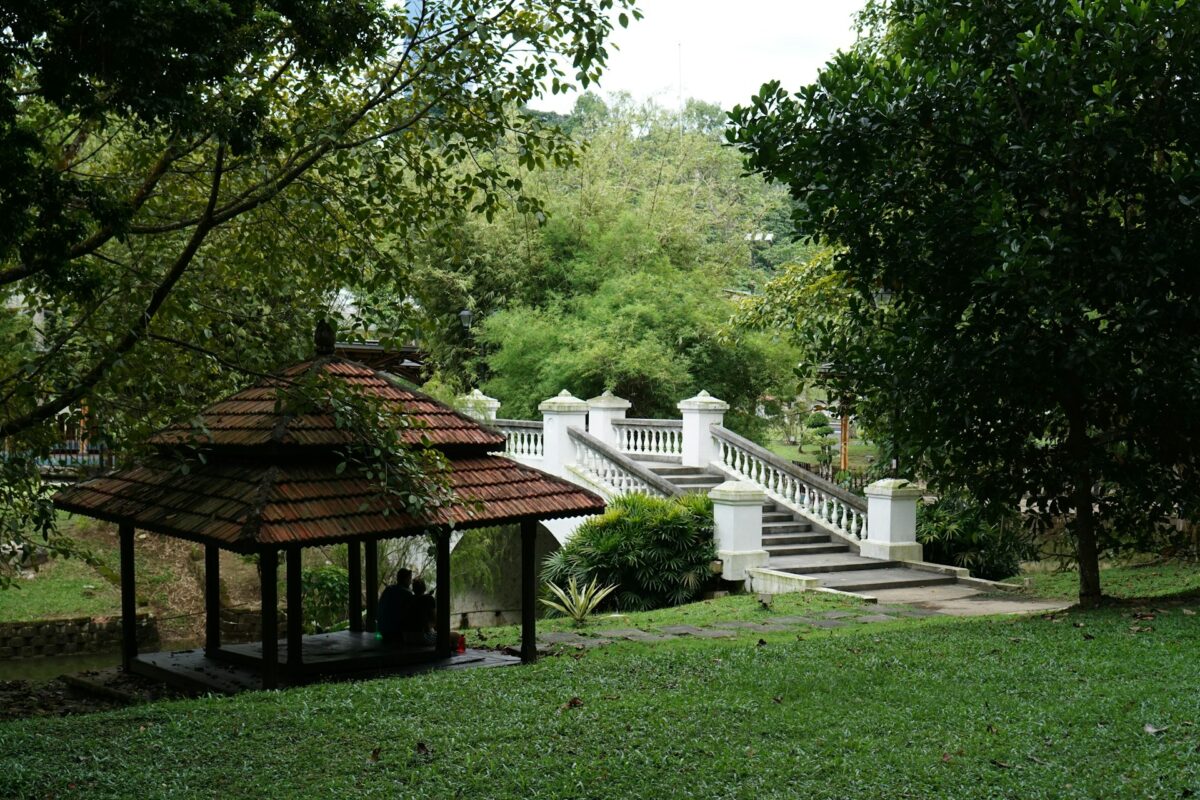
Also known as Lake Gardens, the Perdana Botanical Garden is KL’s oldest park and is right next to the Islamic Art Museum. The garden has several themed areas, such as a hibiscus garden, and walking trails. It’s an excellent place to relax, have a picnic, or enjoy family time.
Insider tips: Wear sturdy shoes if you plan to walk the trails. The best time to visit is in the early morning or late afternoon to avoid the heat and crowds, and early morning also means better opportunities to spot wild birds.
9. Masjid Wilayah Persekutuan
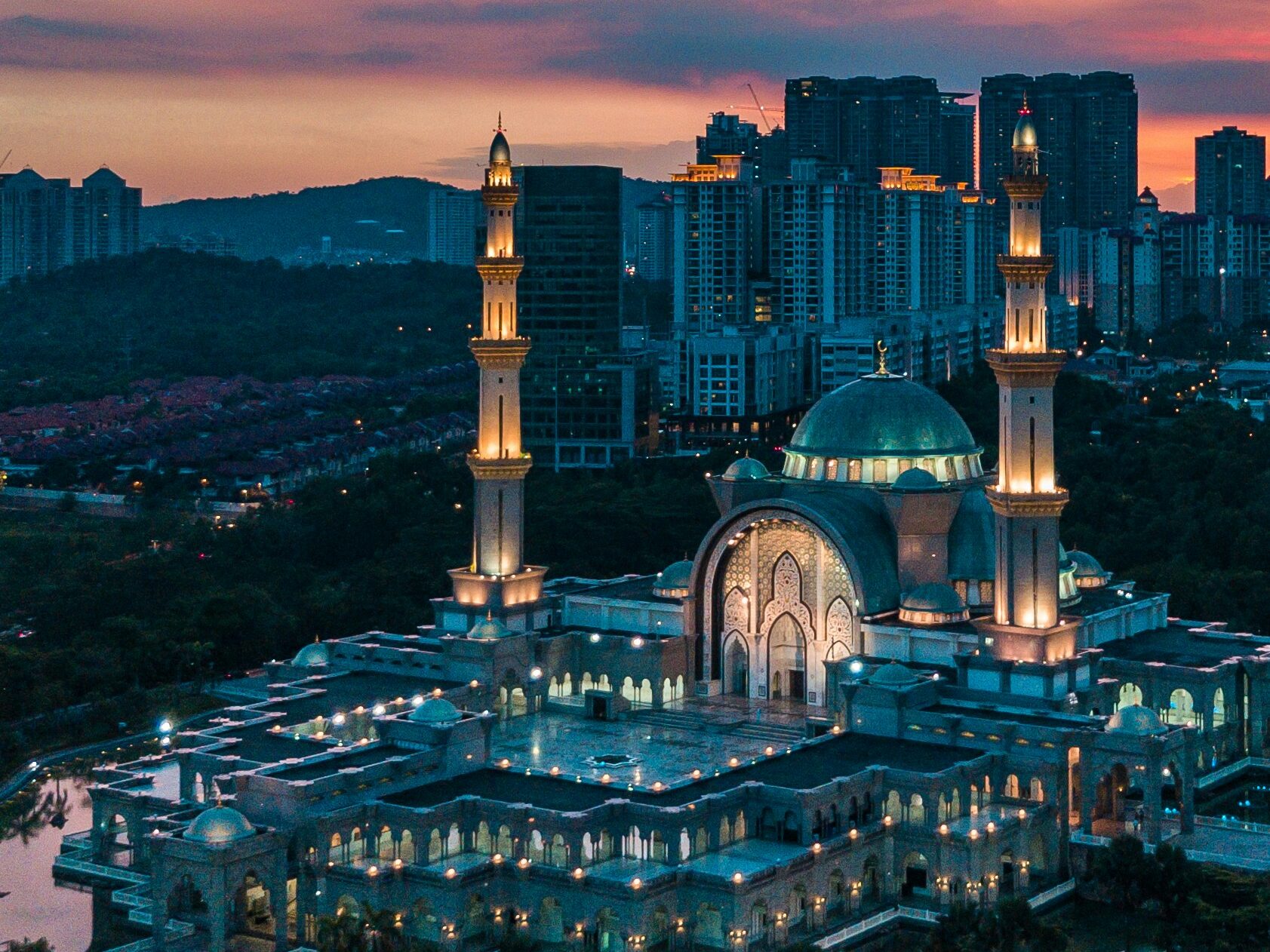
Masjid Wilayah Persekutuan (the Federal Territory Mosque) has Malay and Ottoman designs, with turquoise domes and a column on each side. It’s particularly beautiful when lit up right after sunset. You can take a free guided tour to learn about the unique design and Ottoman influence, and architecture. As with all mosques, there’s a dress code to visit the mosque.
10. Thean Hou Temple
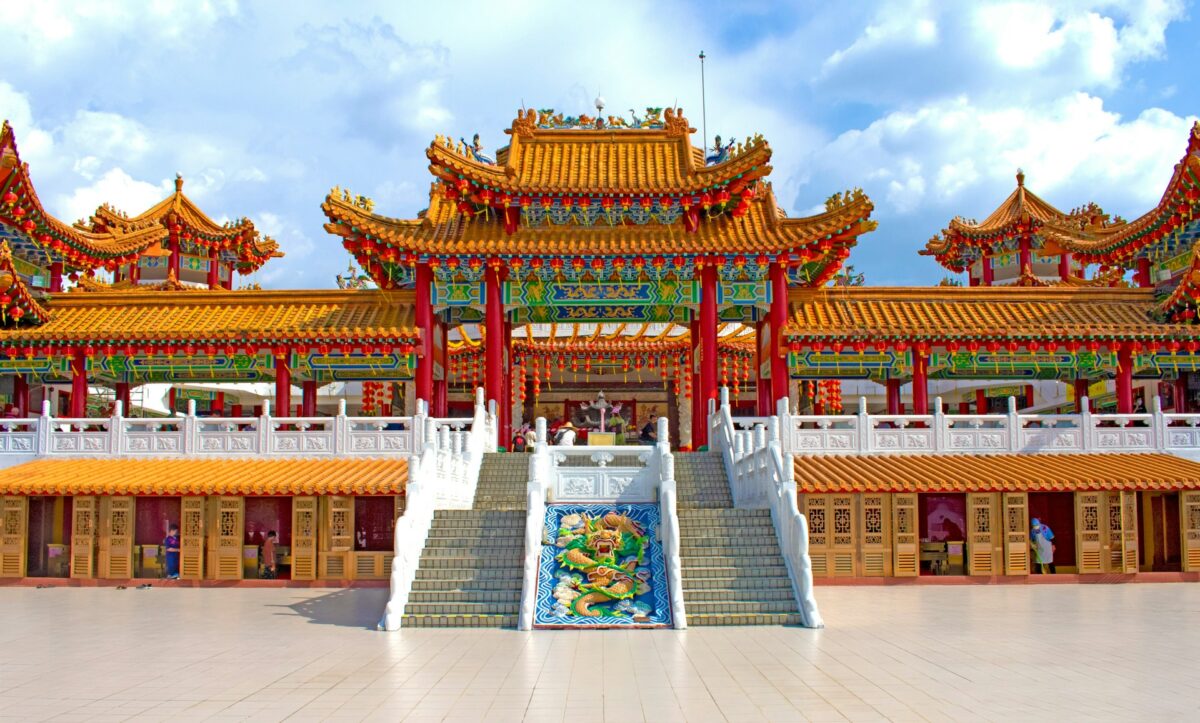
One of the largest Chinese temples in Southeast Asia, Thean Hou Temple showcases Malaysia’s diverse culture. The temple is dedicated to goddess Tian Hou, and is colourful and beautifully designed. Pay special attention to the carvings.
Insider tip: While the dress code for visiting temples is not as strict as for mosques, it’s still required to dress modestly when visiting Chinese temples like Thean Hou Temple. The best time to visit is in late evenings when the temple is lit up, or during Chinese (Lunar) New Year festivities.
11. Putrajaya and mosque
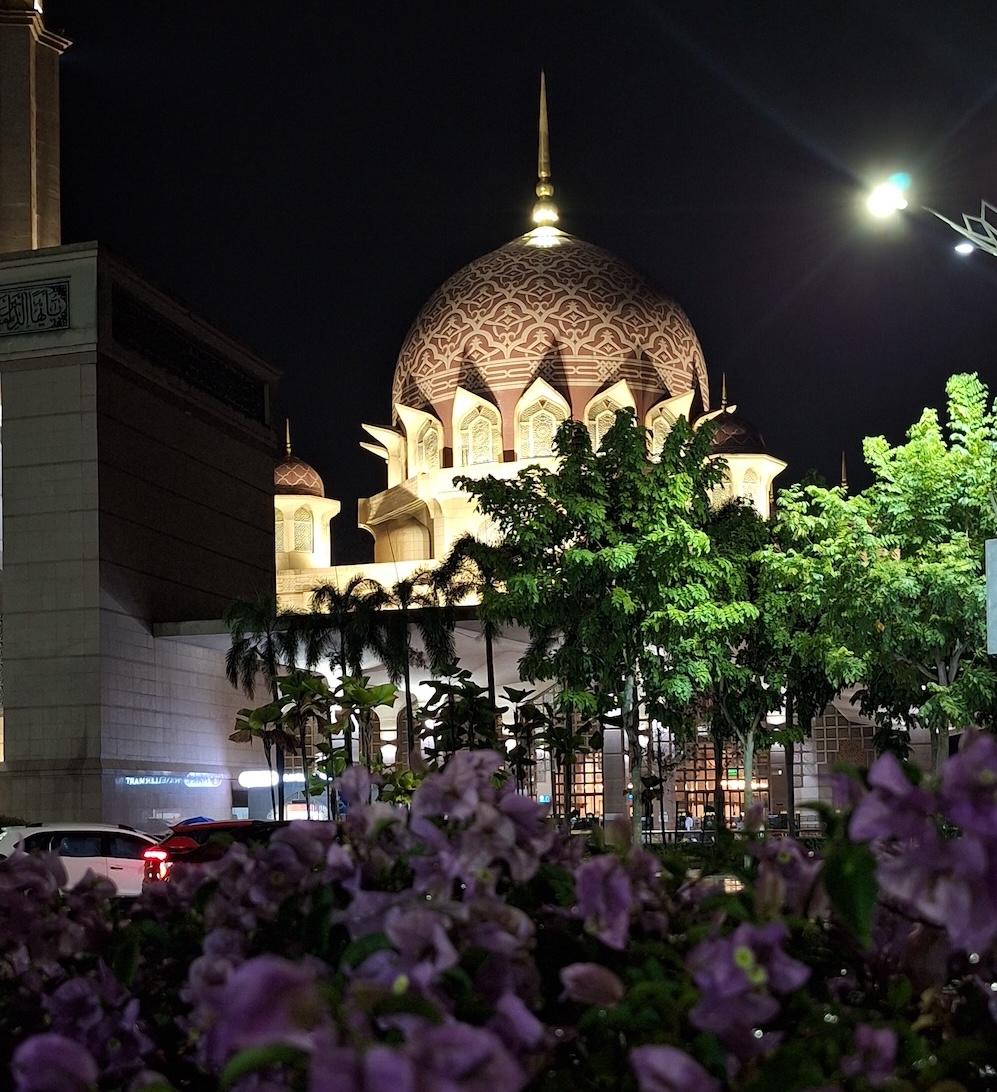
One of my favourite mosques in the world is Putra Mosque, in Putrajaya. At sunset, it’s a spectacular sight with the mosque’s pink dome reflecting in the lake surrounding it. Take a guided tour of the mosque to learn about its significance (note that they close at 6pm for visitors). You can also take a boat ride on the lake surrounding the mosque and to see more of Putrajaya’s landmarks.
Insider tip: Make a day of it and spend some time exploring Putrajaya, Malaysia’s administrative capital. The city has beautifully landscaped parks and architecture to explore. Visit the mosque at sunset, or, even better, stay in Putrajaya when visiting KL. You can easily reach major attractions via public transport.
12. Batu Caves
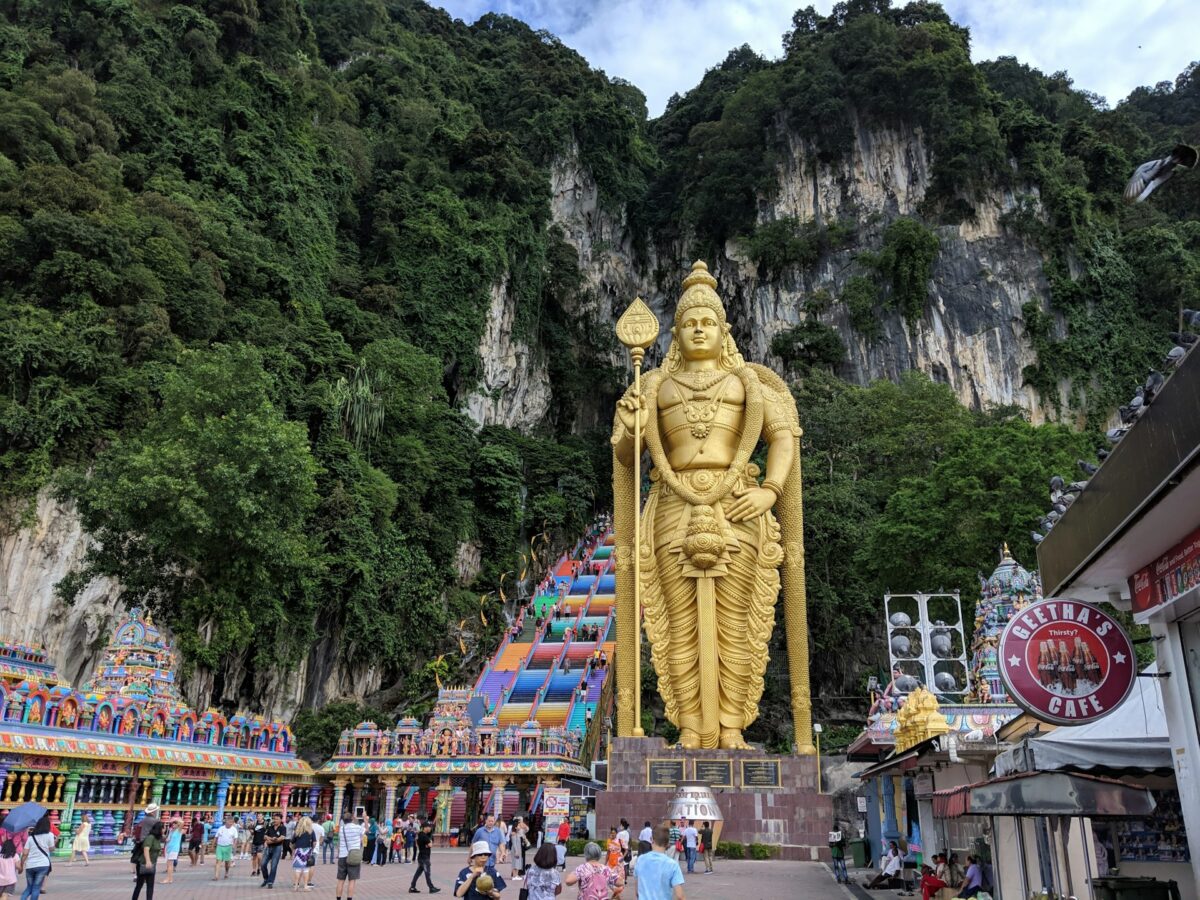
One of the best things to do in Kuala Lumpur to get a sense of its Indian influence is to visit the Batu Caves. The Batu Caves is a hill with a cave and religious relics, and located a bit outside of KL. It’s an important religious site for Hindus, who perform an annual pilgrimage there during the Thaipusam festival. The colourful steps leading to the caves and Hindu statue attract a lot of visitors too.
I visited Batu Caves over a decade ago, before it blew up on social media and became the tourist attraction that it is today. I would not visit it again now due to the surge of tourism and the issues that come with that (more trash and thus more pressure on the environment, disrespectful tourist behaviour, tourists feeding the wild monkeys, etc.).
Tips for the Batu Caves
- Remember that they are a place of worship for Hindus, and festivals like Thaipusam are celebrated there. Do not take pictures of people without consent, especially people who are praying or performing rituals. It’s not a show.
- Dress appropriately and cover your shoulders and knees. I know, Malaysia is a hot and humid country, but if you want to visit religious sites, you have to respect the customs and rules.
- Absolutely do not feed the monkeys. Feeding wild animals like monkeys only makes them more used to, and dependent on, humans. They can also get aggressive when they feel threatened or if they want food, leading to tourists complaining or even getting hurt, and the monkeys end up being seen as nuisances. This leads to more problems like culling, etc.
- There are 272 steps total, so pack water and snacks. If you’re eating beforehand, consume light meals rather than heavy dishes, because you will be doing cardio in heat and humidity.
Tips when visiting mosques and religious sites in Malaysia
- Respect the dress code and cover shoulders and knees. Don’t wear tight or transparent clothing.
- Remove shoes before entering.
- No PDA.
- Talk in low voices and avoid being loud or exuberant.
- Don’t take photos of people without permission, especially during prayer time.
- Respect visiting hours and avoid visiting during prayer times, especially mosques on Fridays, which is a holy day for Muslims.
- Avoid walking in front of worshippers during prayer. At mosques, stay clear of the mihrab (the area, or “niche” indicating the direction of Mecca).
More about Malaysian culture and etiquette.
FAQs
- What’s the best time to visit Kuala Lumpur?
The best time to visit Kuala Lumpur is during the driest months, avoiding the monsoon season from November to December. However, note that even during the non-rainy months, you can still experience random rainfall throughout the year, though these usually come in short bursts rather than all day rain.
- Is Kuala Lumpur worth visiting?
As someone who used to live in KL, I would say that KL is absolutely worth visiting. There are iconic landmarks to see, such as the Petronas Twin Towers, Batu Caves, and temples and mosques, showing the mix of Malay, Chinese, and Indian influence in Malaysia.
- How many days do you need in Kuala Lumpur?
An ideal Kuala Lumpur itinerary to leisurely explore, see the main attractions, do some shopping, try all the dishes, requires at least 5 days. You can, of course, spend fewer or more days, but 5 days in KL is my personal recommendation after having lived there for a few years.
- What are the best things to do in KL for free
Here are the top things to do in Kuala Lumpur for free: Batu Caves, KL Forest Eco Park, most mosques and temples, Perdana Botanical Garden, China Town, Suria KLCC and park (including the daily light show).