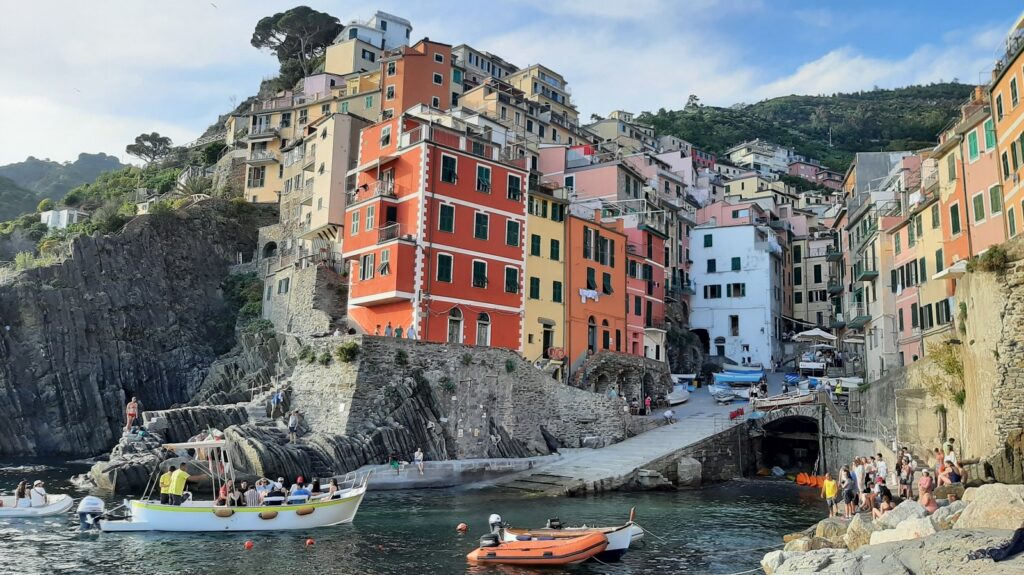
Italy has had an incredible influence on Western culture (and still does), not just for its cuisine, but also for its Renaissance art, its architecture, its impact on the fashion world, and its charming cities and villages such as Venice, Cinque Terre, and Amalfi.
It would not be fair to Italy to generalise its culture, traditions, norms, or even food, as this varies throughout the country. However, there are some facts about Italy that remain true, regardless of the region.
General facts about Italy
Italy is a Mediterranean country in South-Central Europe, and is one of the most visited countries in the world. It is easily recognisable on the world map as it has the shape of a knee-length heeled boot.
- Italy is part of the European Union, the Council of Europe, is a Schengen State, and part of NATO. Its capital city is Rome, and its currency is the euro.
- Italian is the official language of Italy, and most people consider themselves catholic, although the majority don’t practise it religiously anymore (however the religious influence is still very much present).
- The most popular cities and towns in Italy are Milan, Venice, Cinque Terre, Bologna, Florence, Rome, Naples, and the Amalfi region. Other major towns are Trento, Verona, Pisa, Bari, Pompei, Genoa, Turin, and Como.
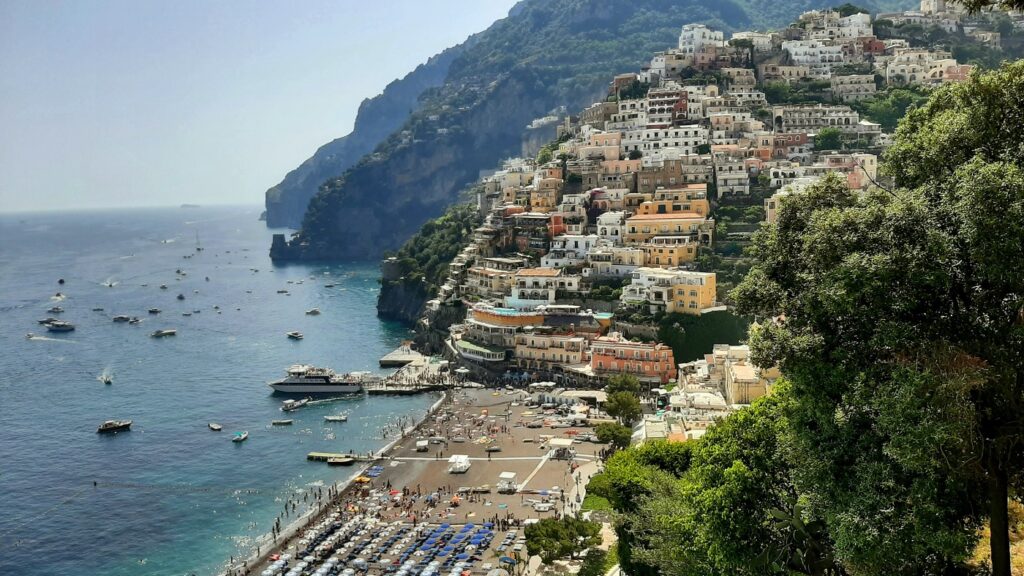
- Two major islands that are part of Italy are Sicily and Sardinia, both known for their beaches.
- Italy has a diverse natural landscape. The northern area is known for its mountains and ski resorts, while the south is great for beach vacations.
- Parts of Italy sit on a tectonic plate, and this can bring about earthquakes and volcanoes, such as Vesuvius, an active volcano between Pompei and Naples.
- The Vatican City is physically in Rome, Italy, as in it is physically rounded by Rome. However, the Vatican is its own country, and is the smallest country in the world. It is often referred to as a city-state. The Vatican is the headquarters of the Roman Catholic Church, and residence of the Pope. There is a secret passageway from the Vatican into Rome, in case the Pope is ever in danger.
- There is another country surrounded by Italy: San Marino. It is one of the oldest countries in the world, and the official language is Italian.
- In the early 20th century, Italy’s economy was mostly agricultural.
- Italians are physically diverse, meaning that you can meet Italians that are blond and blue-eyed, and also meet Italians that have olive skin and black hair. This is due to the different areas that were invaded by various people.
- The Renaissance was an era of cultural and intellectual sprouting, and started in Florence. Italy was the perfect place for the Renaissance because it had multiple prosperous cities, a thriving merchant class, and Greek and Roman influences.
- Italy’s most famous artists and philosophers are Leonardo da Vinci, Niccolo Machiavelli, Galileo Galilei, Donatello, Michelangelo Buonarroti, and Raphael Sanzio.
- You can drink from the public water fountains, the water is safe to drink. Unless there’s a sign indicating otherwise.
- August is vacation month in Italy. Many shops and restaurants are closed then.
Random facts about Italy that you might not know
- Rome has a nickname: the Eternal City.
- There are bears and wolves in Italy, which is rare in Western and Southern Europe. They can be found in the wild in the Apennine Mountains region.
- Italy’s landscape is rugged, and before roads were created, it was difficult to get from one city to another. Consequently, each city was quite distinct from each other, and were self-sufficient, but also unfortunately not trusting of each other. Til today, there’s a bit of rivalry between the north and the south.
- Italy only became a unified country in 1861, yet Rome is one of the oldest cities in the world, founded in 735 BCE.
- Before the Romans, the first civilisation in Italy were the Etruscans.
- The Roman Empire was one of the most powerful empires in the world, stretching from India to Scotland within a few centuries.
- The Roman Empire experienced internal power struggles between its leaders, political parties, ethnic groups, etc.
- The empire fell due to barbarian invasions by people who were once Roman residents. Various areas of Italy then became city-states with their own rules.
- Italy has more UNESCO World Heritage Sites than anywhere else in the world. Many of them are found in the capital city, and are definitely some of the best ways to explore Rome in an eco-friendly manner.
- Mussolini ruled as a dictator for 20 years until he was executed in 1945 after fighting with Nazy Germany. However, he was not a fascist at first. He was a socialist and was originally the Prime Minister of Italy before becoming a dictator.
- The Italian flag was inspired by the French flag. It has three colours: green represents hope, white represents faith, and red is charity.
- Italy is home to many inventions: piano, eyeglasses, thermometer, and batteries.
- You would never think of Italy as holding major Christmas events – Christmas markets and festivities are more popular in the Nordic European countries. However, Christmas is hugely celebrated in Italy as it is part of Roman Catholicism, and every city goes all out every year with their decorations and celebrations.
Cuisine of Italy
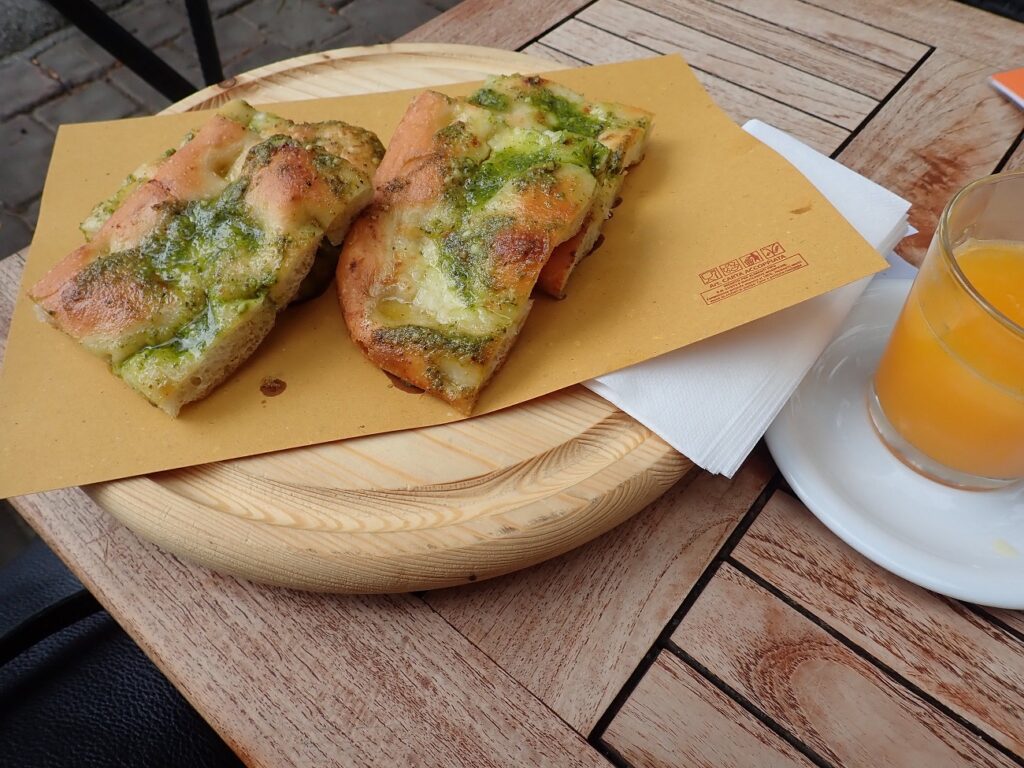
When it comes to food, there are a few things that Italy is known for: pizza, pasta, pesto, cheese, wine, but also, surprisingly, chocolate.
Some fun facts about Italy’s food scene
- Making Pizza Napolena is an art, and is part of UNESCO’s list of cultural heritage.
- Italians can consume up to 14 billion espressos per year. They usually drink it after a meal.
- Italy produces the most wine in the world, and is also the largest wine exporter.
- Salad is not an accompaniment or an appetiser, but rather to end the main meal.
- Pasta and ice cream were not invented in Italy. It’s most likely that Marco Polo brought those inventions to the table after he came back from China.
- Breakfast usually consists of a cappuccino and a pastry. Do not order a cappuccino after 11 AM.
- Each area of Italy is famous for a particular ingredient or dish
- Cinque Terre: pesto, anchovies, fried fish, focaccia, basil gelato
- Rome: Roman pizza, cacio e pepe pasta, artichokes, zeppole (fried dough with powdered sugar)
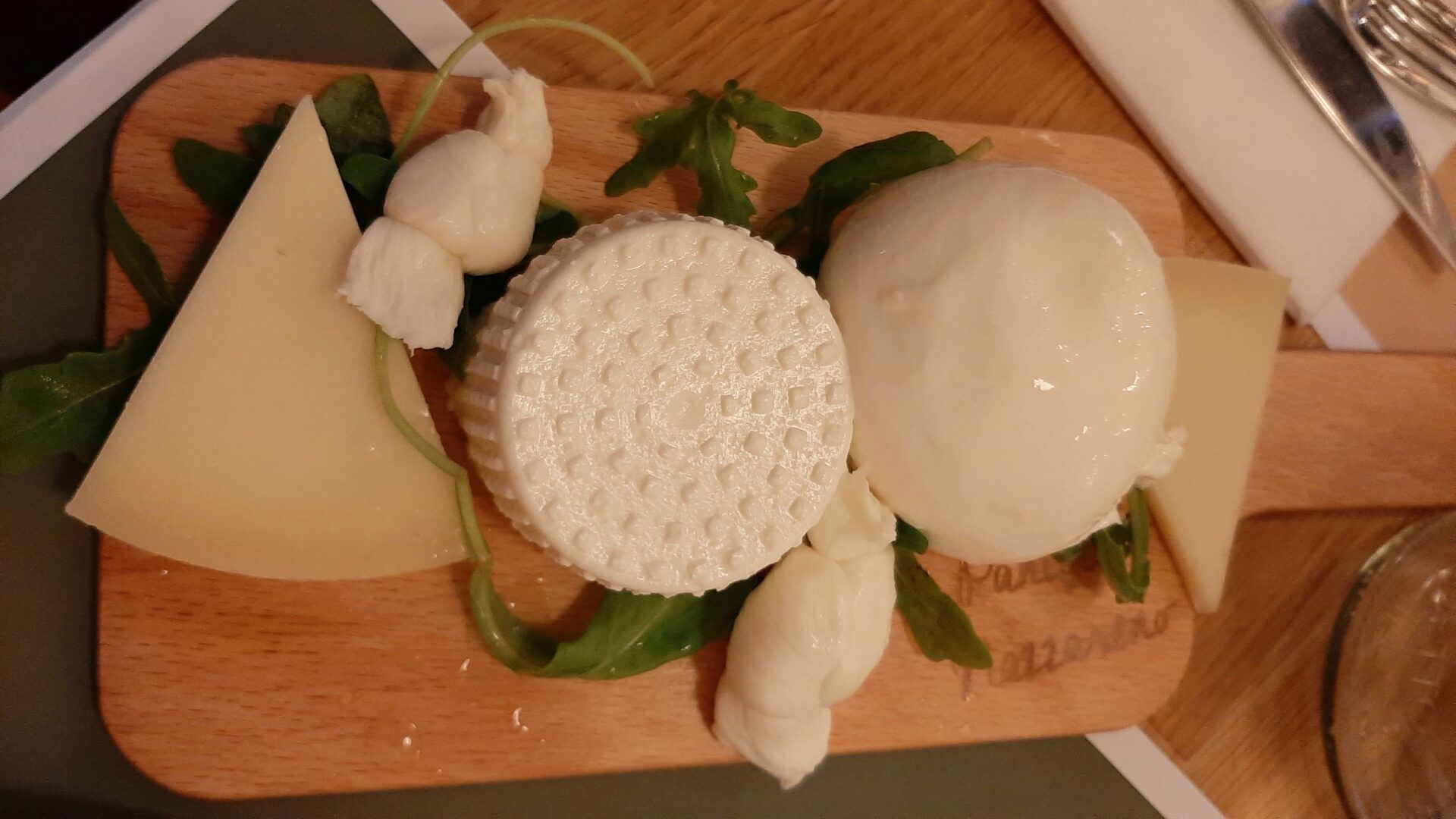
- Amalfi: seafood, burrata, mozzarella di bufala, gnocchi, chocolate cake (torta caprese), chocolate eggplant (melanzane al cioccolato)
- Naples: sfogliattela pastry, pizza napolitana, parmigiana al tegamino (eggplant)
- Milan: risotto
- Sicily: arancini, cannoli, Sicilian pizza
Italian pizza
The concept of a pizza (flat bread-like base) has existed for thousands of years, but the current version of a pizza is said to be from Naples, from the 1700s.
There are 3 main types of pizza found in Italy: Roman pizza, pizza Napoletana, and Sicilian pizza.
- Roman pizza has a very thin crust and is crispy.
- Pizza Napoletana takes more time to make because the dough requires 24 hours to rise, but is then baked in less than 2 minutes. The end result is a soft, fluffy crust.
- Pizza Siciliana is thick and fluffy, and usually baked in a rectangular pan.
Facts about Italy’s cultural etiquette when visiting
- Between families and friends, Italians kiss on the cheek when they greet, regardless of gender (this is pre-Covid, the before era). Between strangers you can shake hands and give a smile.
- Maintain eye contact when talking and interacting.
- Family is very important in Italy, and has a strong influence on its members. Do not criticise anyone’s family members.
- Appearances matter a lot in Italy. In fact, you can be judged before saying a word, and most people are very fashion conscious. Elegance is appreciated. Make sure to dress appropriately.
- Remove your hat when indoors.
- Hierarchy is a big thing in Italy, likely an influence of the church. Respect is given to older people, as well as those who are successful in the business sense, or from an influential family.
- If you receive a gift, you are expected to open it upon receiving it. Italians like to give gifts of high quality.
- When yawning and sneezing, it is imperative to cover your mouth.
- Arriving a bit late is acceptable (between 15 to 30 minutes) unless it’s for a business meeting.
- Any sign of arrogance or rudeness will not be appreciated.
- Harmless flirting is part of the culture.
Cultural etiquette when dining
- As mentioned above, do not consume cappuccino after breakfast time.
- Do not place bread upside down, as this was associated with executioners in the Middle Ages and bread being given to them upside down.
- Bread is used to absorb sauce, not as an appetiser.
- Arriving right on time to a dinner party is not necessary – a 15 minute delay is acceptable.
- Meals can last for hours.
- Don’t talk with a mouth full of food.
- Bring chocolates or a good bottle of wine when invited to dinner.
- Eat a small portion at first so that you are able to accept a second helping when prompted by the host. However it’s also ok to leave some food on your plate once you’re full.
- Don’t put your elbows on the table, and don’t keep your hands on your lap.
- Do not use your fingers to take cheese.
- To get a waiter’s attention, just raise one index finger and make eye contact. Do not whistle, beckon them with your hand, or yell.
Final thoughts on facts about Italy
Italy is a delightful country with diverse people, food, and natural landscape. Learning a little bit about the country and its history, culture, and etiquette will make your trip much more memorable.
If you’re visiting Rome, check out these eco hotels.