A trip to Norway will be an amazing adventure regardless of your planned activities. But in order to make it even more memorable, check out the most important facts about Norway below, to get a sense of the country and its culture, and what dishes you might want to try.
Before your trip, find a list of the best eco hotels in Norway.
Let’s start off with the basic facts about Norway
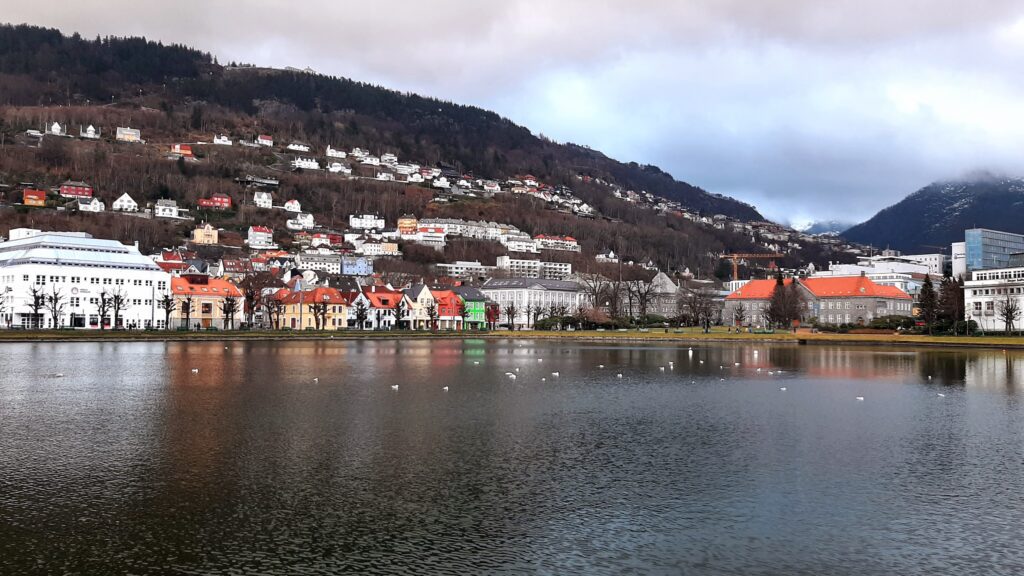
- Norway is in northern Europe, part of the Scandinavian countries, and bordered by Sweden, Finland, and surprisingly Russia (at the very top).
- The capital of Norway is Oslo.
- Norway is part of the European Economic Area (EEA) but not the EU.
- The currency is the Norwegian Krone.
- Norway is a monarchy.
- The two official languages are Norwegian (a Germanic language) and Sámi languages, a Uralic language which consist of 10 or more variations. Swedish and Danish people can more or less understand Norwegian and vice versa. English is widely spoken.
- In Norway, they drive on the right side.
- Most Norwegians are Lutheran but do not actually practice religion.
- Yes it is true that Norway is very expensive, and more so than its other Scandinavian friends, due to high taxes and cost of living. To give you an idea, we paid about €15 for a basic croissant with avocado and cheese from a small cafe.
- Norway is considered expensive both for tourists and residents alike, but people with a Norwegian salary earn enough to deal with the costs of living.
- Norway is known for its natural and beautiful landscape, snow, midnight sun, northern lights (Aurora Borealis), fjords, mountains, and polar bears (only in Svalbard).
Fun facts about Norway and the Norwegian culture
People and happiness
Norway is often ranked as one of the happiest countries in the world. Happiness in Norway does not mean that the people look happy in the expected sense (aka smiling and having a grand ol’ time). In fact, Norwegians are not considered particularly warm, even though our experience has been that they are helpful.
What it means is that the country has a high standard of living, where people can live comfortably with a decent income, have high individual freedom, equal and civil rights, and democracy. Being surrounded by so much nature and natural beauty is also an added factor that contributes to happiness.
Vikings
Norway is known as the land of the vikings. There’s even a viking ship museum in Oslo that’s a major attraction. The Viking Age happened from the 8th-10th centuries AD, forming the Kingdom of Norway. However, prior to the Vikings, there were already people living in Norway since 9000 BC.
The Vikings went on to conquer new regions because of overpopulation, developing their skills in sailing.
Fun fact: the Vikings set foot on the Americas (US and Canada area today) way before Columbus “discovered” it. There is archeological evidence near the Canadian province of Newfoundland.
Thor
Thor (the Marvel DC character with the huge abs… I mean hammer) is actually a Norse god according to the mythology. He is the god of thunder, storms, and the sky, and was worshipped by the Vikings.
We learned a lot about Thor at the Ice Dome tour in Tromso that we took (side note: their veggie goulash was the best I’ve ever tasted). Wear warm winter/snow shoes for this tour, you will be inside an ice dome for about 45 minutes at least.
Sustainability and environmental efforts
Norway is one of the leaders in renewable energy and green efforts, and is one of the most sustainable countries in the world. Sustainability is embedded in the culture and people’s lifestyle, and is evident in their consumption habits, whether it’s eating or shopping.
However, it’s also important to note that Norway is rich in oil, and is in fact a major supplier of oil and gas to the EU and UK. Selling their oil played a big factor in building the economy.
Active and sporty culture
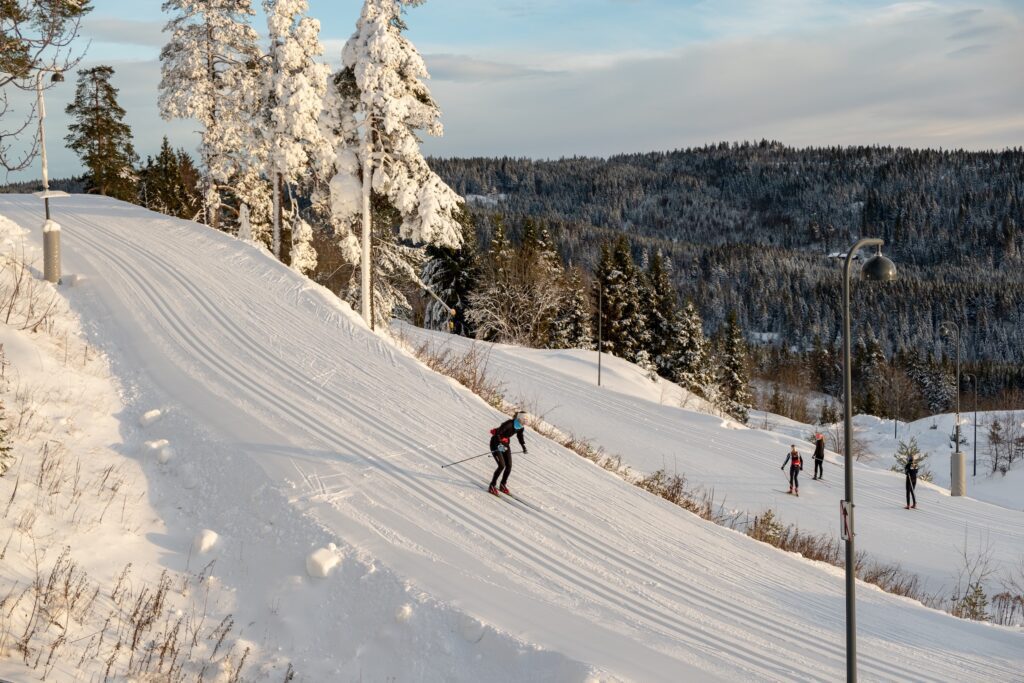
Norwegians are active people, and with such easy access to nature, it makes total sense. The most common sports in Norway are cross-country skiing, hiking, rafting, and ice hockey, but soccer is one of the most popular ones too. Skiing is considered Norway’s national sport.
Main reasons people visit Norway
Fjords
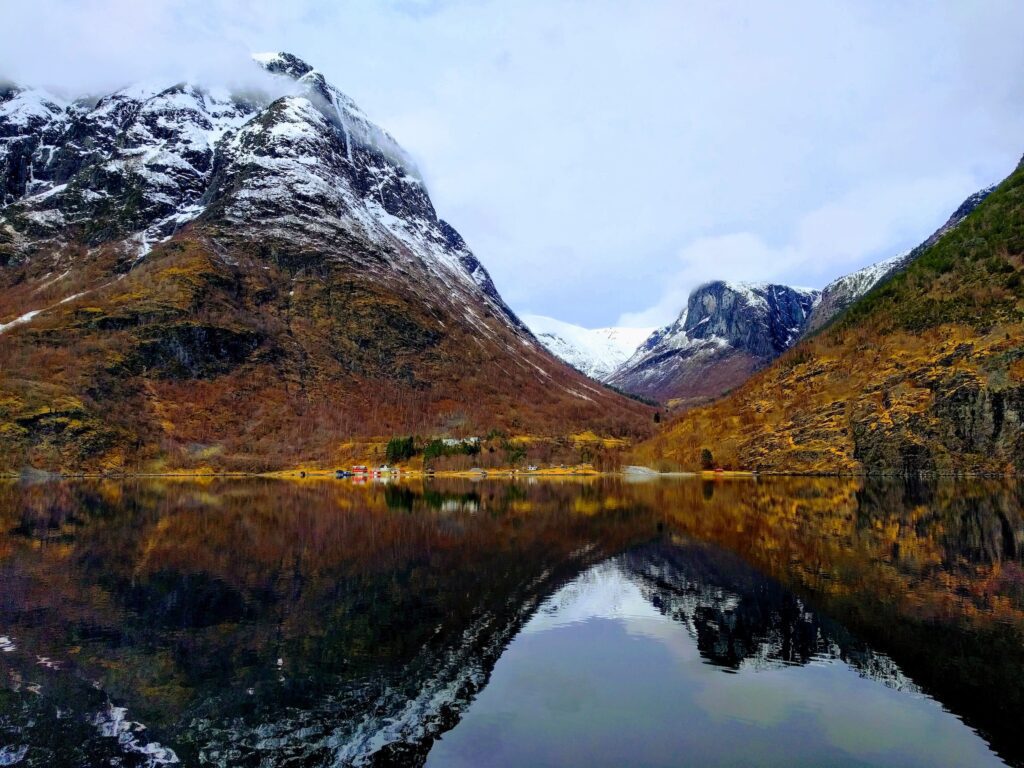
A fjord is a Norse word, from the word “fjǫrðr”, meaning where one travels through. A fjord is not an ocean, nor a river, nor a lake. They are by definition, a long and deep body of water that goes far inland, is surrounded by cliffs and steep rocks, and usually meets another body of water such as the sea.
You can do fjord cruises in Norway, the most popular ones being Geirangerfjord during summer, and Nærøyfjord all year round. While cruises are bad for the environment, the ferries used in Norway for fjord cruises are eco-friendly, silent, hybrid or electric, with zero to low carbon emissions.
Fun fact: Fjords are generally thought to be a Norwegian thing, but fjords also exist in New Zealand, Chile, Canada, Greenland, and Alaska.
Northern lights or Aurora Borealis
Norway is one of the countries where you can see the Northern Lights, from September to March when the nights are darkest.
It is highly likely to see the Northern Lights in Troms county in the north of Norway, however the best recommended place to see them is in Abisko in Sweden right by the border with Norway (you can take a train from Narvik in Norway).
Sámi culture
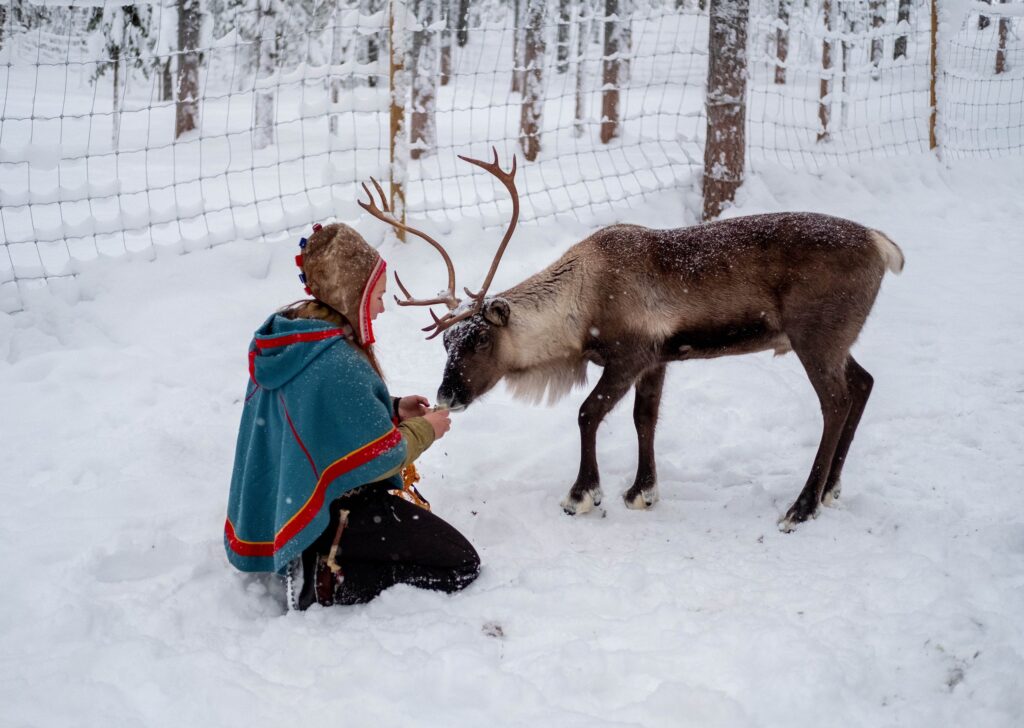
The Sámis are indigenous people who live in the far northern part of Europe, known as Lapland. They are one of the oldest surviving cultures of Norway, and are known for reindeer herding. They suffered a lot of discrimination in the 1900s by the government and were forbidden to practise their customs and speak their language (Sámi), which is very different from Norwegian, but today they are allowed to preserve their culture and keep their land. Visiting Sámis villages is a major tourist activity in Northern Norway.
Sámis and Vikings existed at the same time, but are not part of the same ethnic group. Sámis are in Norway, Finland, Sweden, and Russia, but more than half of the total population live in Norway. And while the Sámis of Norway share some similarities with the other Sámis, they don’t consider themselves kin, and the Sámi language across countries is not all the same.
Reindeers form a big part of the Sámi culture, so many families own reindeer. The reindeers are generally respected and treated well, and are not killed for meat and skin until they are old and/or already dying of natural causes.
Reindeer activities and dog sledding
A popular activity is to go visit reindeers or going dog sledding. For various reasons detailed in the article “travel tips for a sustainable adventure in Norway”, we did not feel comfortable doing any activities involving dogs, whether it was sledding or visiting dog farms. However, “feeding the reindeer” activity was fine, and we got to learn a lot about the Sámi culture.
Forests, mountains, and national parks
There are 47 national parks in Norway and they are all free to visit. Hardangervidda (between Oslo and Bergen) is home to wild reindeers, glaciers, mountains, waterfalls, and fjords.
Cultural adaptation and etiquette in Norway
- Punctuality: Norwegians are usually punctual, both in social and professional settings.
- Personal space: It’s important to give personal space to Norwegians. Standing physically too close is terribly off-putting, especially in public settings among strangers.
- Honesty: Norwegians appreciate honest points of view and straightforward conversations where one speaks their mind.
- Greetings: Upon meeting someone, giving a handshake and making eye contact is expected, even a smile. Being an egalitarian culture, people address each other informally, by the first name rather than using Mr and Mrs. Small talk is also not a thing.
- Not imposing on others: Norwegians do not like to impose anything on others. For instance, you might be with your Norwegian friend who runs into another friend while hanging out with you, and chatting for a while without introducing anyone to each other, because they just don’t want to intrude and impose.
- Complaining: Norwegians don’t generally like to complain unless absolutely necessary. This is somewhat related to them not wanting to impose anything on anyone. Complain only when you really need to.
- Norwegian humour: expect dry humour from Norwegians.
- Bunads – Norway’s National Day: This day is taken very seriously, and is celebrated even by Norwegians who live abroad. People dress in traditional outfits and celebrate together on the day with parades, drinks, and food.
- Religion: People in Norway don’t discuss religion often, simply for the fact that most Norwegians are not religious. On the same note, no one will judge anyone else for their beliefs.
- Work-life balance: Norwegians have a good work-life balance, and the work culture is generally pleasant and understanding.
Cuisine of Norway
Brown cheese

Norwegians enjoy something called Brunost, which is brown cheese. It’s made of whey, milk, and cream, and is a big part of Norwegian culture. It’s not actually cheese, but is regarded as cheese. It tastes mildly sweet, and is usually consumed with both sweet and savoury meals, such as on waffles with jam and cream (a typical breakfast and snack) or for preparing sauces for meat dishes.
Seafood
Being by the sea, Norway has access to all kinds of seafood. The most popular seafood in Norway are salmon, cod, and halibut. You will easily find open sandwich snacks consisting of smoked salmon on toast or crackers.
Fun fact: codfish is very popular in Portugal, and is called bacalhau. Portugal has an expression that says that there are 1000 ways to cook bacalhau. In fact, bacalhau is so popular in Portugal that it is the main dish at Christmas, and some even think it’s the national dish of Portugal. However, all the codfish in Portugal come from Norway.
Fårikål – Norway’s national dish
Norway’s national dish is fårikål, which is a mutton and cabbage stew. It’s often a party dish, as during autumn when it starts getting colder, people around Norway host lamb stew gatherings.
Kjøttkaker
Kjøttkaker are meatballs, but different from the Swedish ones (it’s a point of contention to compare Kjøttkaker to Swedish meatballs). Kjøttkaker are minced beef mixed with spices such as ginger and nutmeg, and usually served with potatoes and cabbage stew.
Tacos
Tacos are not a Norwegian invention, but they are somehow a very common meal to consume in Norway, almost a tradition on Friday nights with friends.
Facts about Norway: conclusion
Norway is no doubt an interesting country with a fascinating history and culture, and learning about all it has to offer will only enhance your experience there. Maybe you want to try the brown cheese (it’s an acquired taste for most), or learn how the Sami are finally getting their rights back. Don’t forget to try Norway’s version of kit kats, called Kvikk Lunsj. It’s very similar to kit kats, but I swear they taste better, and are more ethical.
Pick a hotel from our curated sustainable hotel in Oslo list here, and don’t forget to check out the best things to do in Oslo, as well as the most scenic and affordable way to get from Oslo to Bergen (or vice versa).