Close your eyes and picture a Greek island for a moment. I bet the immediate visual that came to your mind was whitewashed houses and blue domes. These are the aesthetics of just some of the Greek islands, and these particular ones form part of the Cyclades group. They all have similar architecture, while other Greek island groups have completely different vibes.
Greece is said to have over 6000 islands and islets, only 227 of which are inhabited. That’s a headache when trying to decide which Greek island to go to. It’s impossible to do it all, but since the islands in the same groups are similar to each other, you could try to visit one from each group instead.
This is also great news if, like me, you prefer to skip overcrowded Greek islands like Santorini, which is dealing with overtourism and ethics regarding the treatment of donkeys, but still see something similar to it.
Here’s a detailed breakdown of all the Greek island groups to help you plan your trip.
How are the Greek islands grouped?
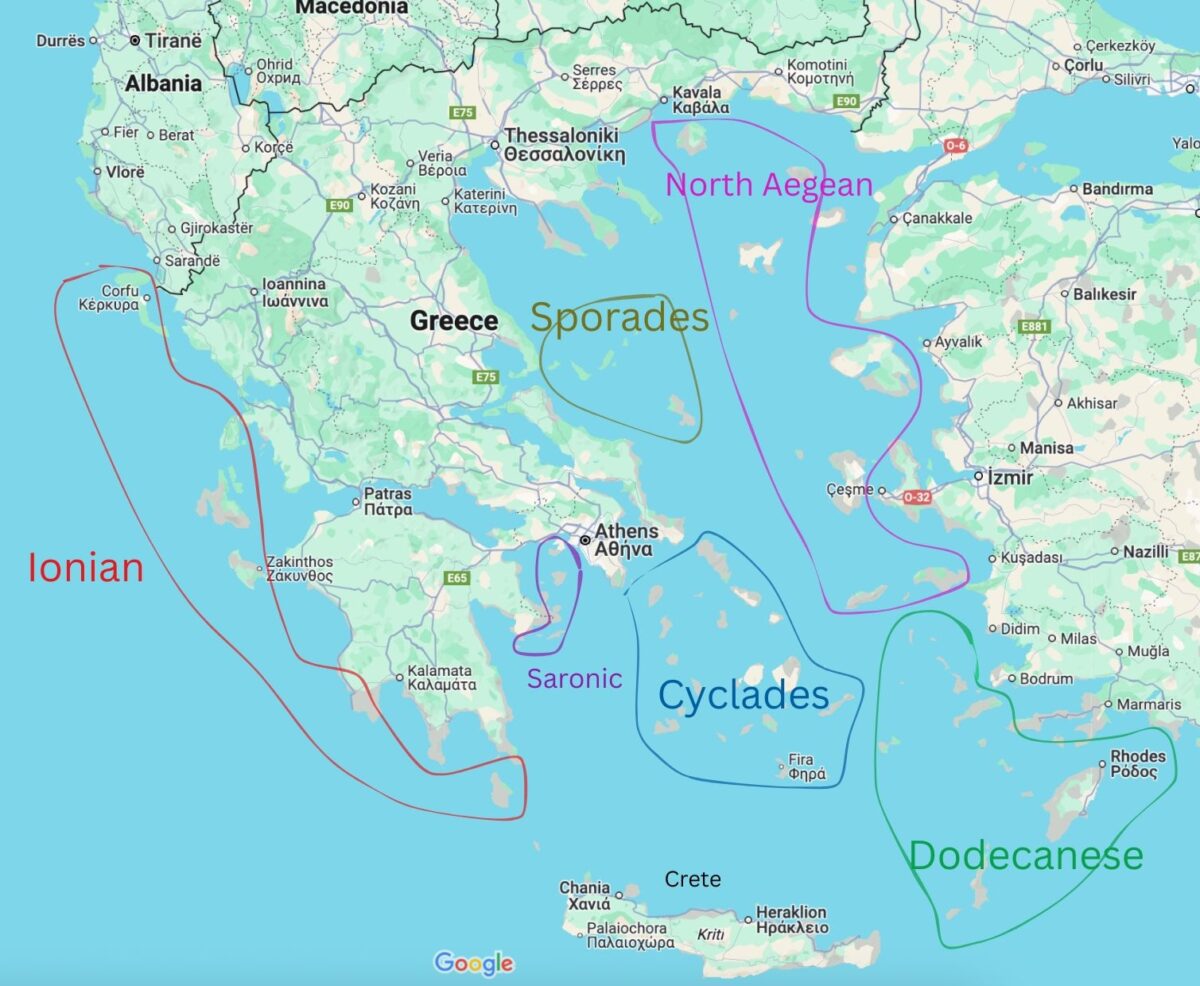
There are 6 Greek island groups:
- The Cyclades (e.g., Santorini, Milos, Mykonos, Paros)
- The Sporades (e.g., Skiathos, Skopelos)
- The Ionian Islands (e.g., Corfu, Kefalonia, Paxos, Ithaca)
- The Dodecanese (e.g., Agathonisi, Leros, Rhodes)
- The Saronic Islands (e.g., Hydra)
- The North Aegean Islands (e.g., Thassos, Lesbos)
There are also a few other Greek islands that are standalone islands, such as Crete and Evia.
Crete is a popular destination and does not belong to any of the 6 Greek island groups. It’s quite large compared to the other islands, and is home to two pink beaches and a rich medieval history, which includes castles.
1. The Cyclades
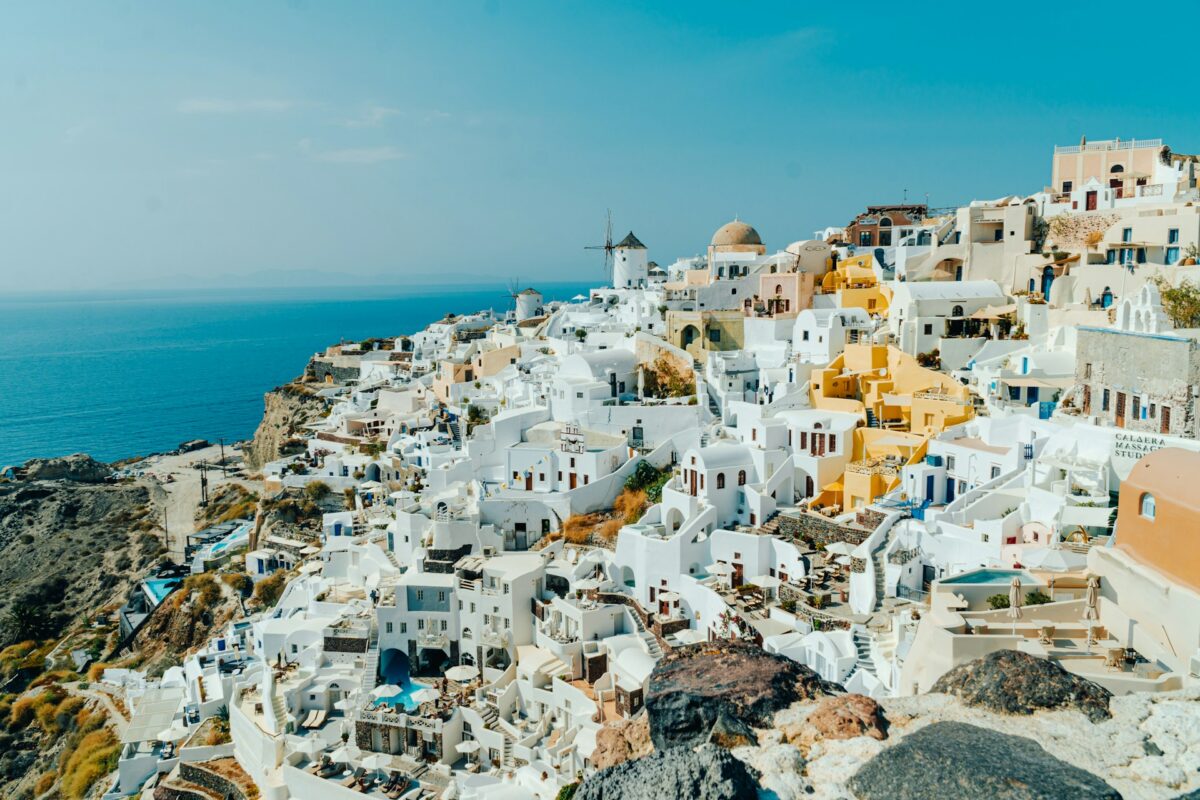
The Cyclades island group has around 220 islands. Santorini is the most popular Cycladic island due to its cliff views, sunsets, and general charming appeal, but other Cycladic islands have very similar architecture, with white-washed houses, and blue doorways and domes.
Fun fact: the white and blue colours of the Cycladic islands were for warding off evil spirits, and also to represent their national price, since they weren’t allowed to display their flag during the Ottoman occupation. The blue also represents the sea and sky.
Popular Cycladic islands besides Santorini include Milos and Mykonos, but Naxos and Paros are starting to become popular as less crowded alternatives to Santorini.
I highly recommend Naxos. I spent a few days there and had the most perfect relaxing time in a zero-waste hotel in the mountains.
The Cyclades islands are very close together, and island hopping is common.
These are the most popular Cyclades islands:
- Amorgos
- Anafi
- Andros
- Antiparos
- Delos
- Donousa
- Folegandros
- Ios
- Irakleia
- Kea (also known as Tzia)
- Kimolos
- Koufonisia
- Kythnos
- Milos
- Mykonos
- Naxos
- Paros
- Santorini (also known as Thera)
- Serifos
- Schoinousa
- Sifnos
- Syros
- Tinos
2. The Sporades
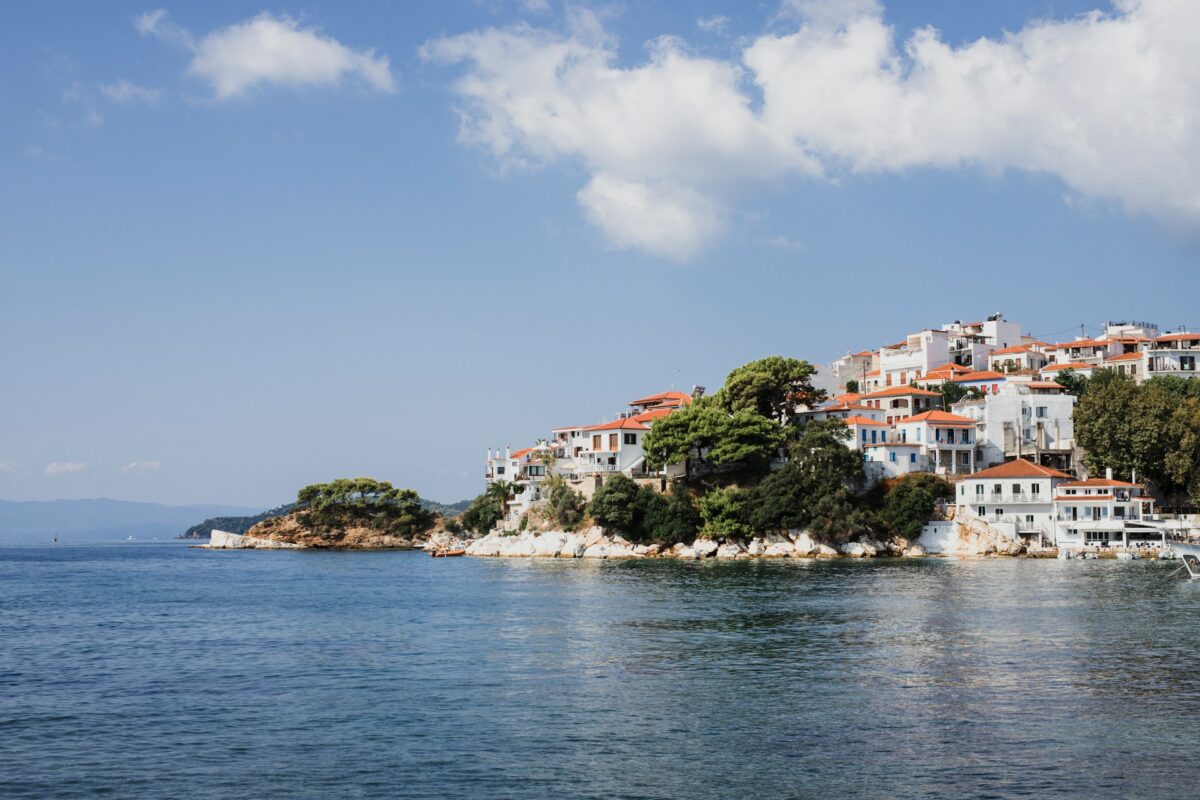
Sporades actually means scattered, and yes, they’re not as close together as the Cyclades, but personally, I think they’re less scattered than the other Greek island groups, like the Ionian or the North Aegean islands.
There are 24 islands that form part of the Sporades, but only 4 are permanently inhabited.
These are the 4 permanently inhabited Sporades islands:
- Alonnisos
- Skiathos
- Skopelos
- Skyros
The most visited islands are Skiathos and Skopelos.
Skiathos is tiny (about 11km long, or 7 miles), but it has a small airport and plenty of beaches to explore.
Skopelos is larger than Skiathos but has fewer crowds, despite its equally beautiful beaches and hills, traditional Greek architecture, and being the filming location of the 2008 movie Mamma Mia.
3. The Ionian islands
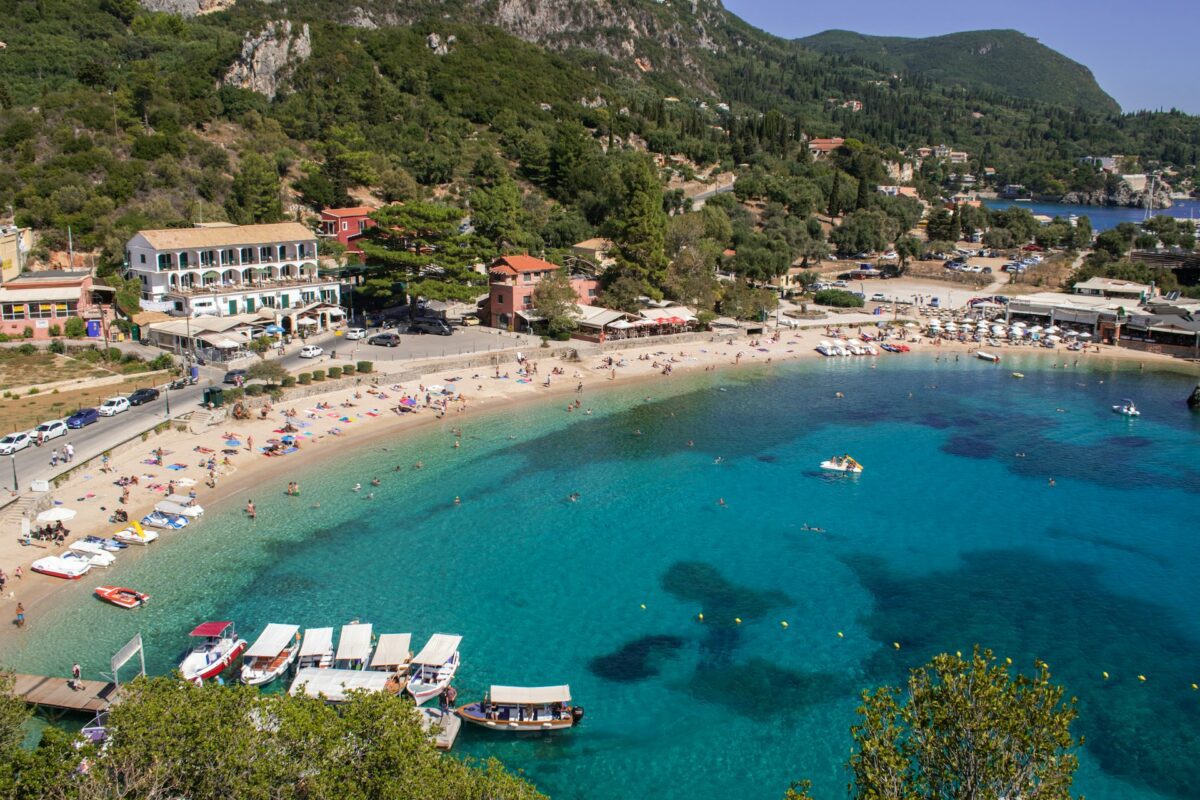
The Ionian islands are quite distinct from the other Greek island groups due to their Venetian influence (the Ionian islands belonged to the Venetians for centuries) and natural landscapes. Think limestone rocks, colourful buildings, green hills, and pine trees, but they also have clear turquoise lagoons that attract many visitors.
The Ionian islands are:
- Corfu (Kerkyra)
- Ithaki (Ithaca)
- Kefalonia
- Kythira
- Lefkada
- Paxos (and Antipaxos)
- Zakynthos (Zante)
The most popular islands are Corfu (locally known as Kerkyra), Kefalonia, and Paxos. I spent about 1 week on Corfu and did a short trip to Paxos.
4. The Dodecanese
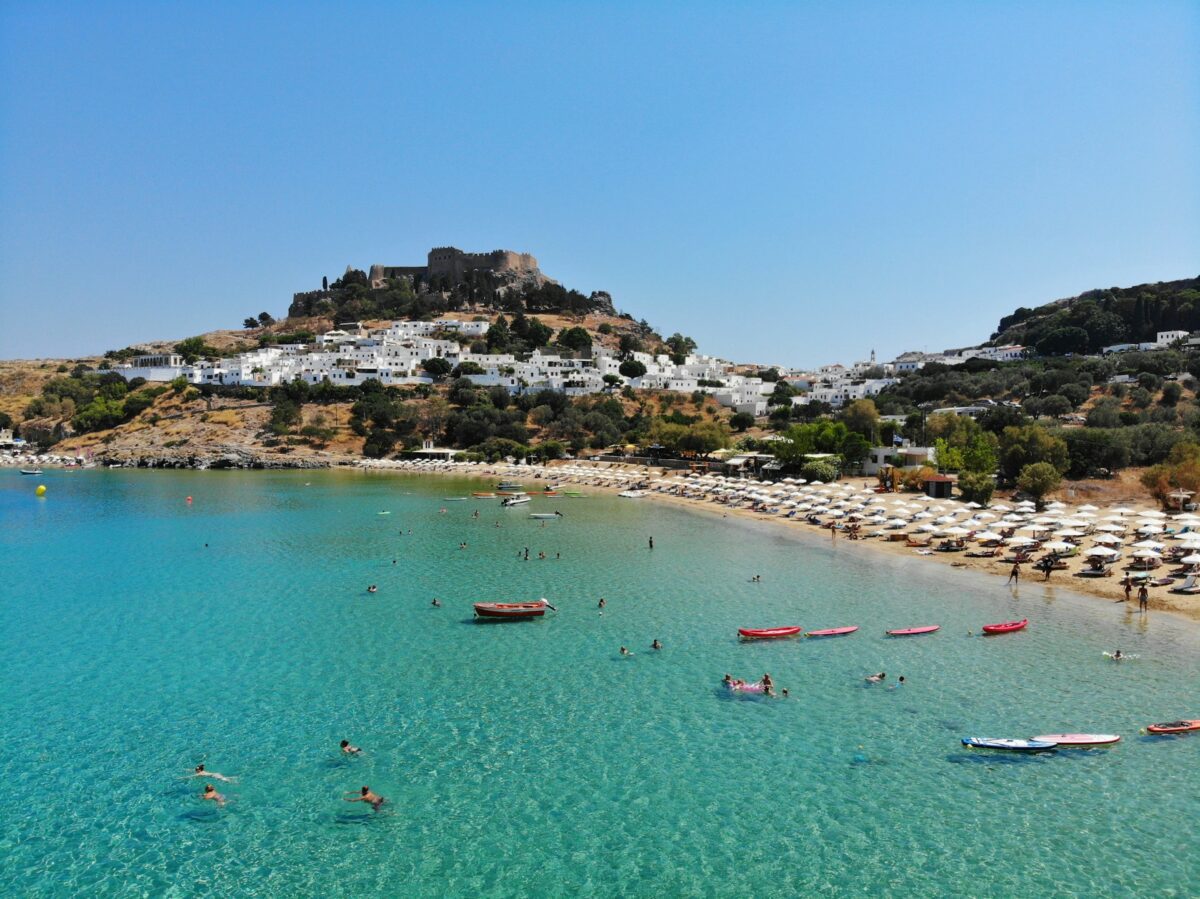
This Greek island group, closer to Turkey than to Athens, consists of about 165 islands, 26 of which are inhabited.
The main Dodecanese islands are
- Agathonisi
- Astypalaia
- Chalki
- Kalymnos
- Karpathos
- Kasos
- Kastellorizo
- Kos
- Lipsi
- Leros
- Nisyros
- Patmos
- Rhodes
- Symi
- Tilos
The most popular island is Rhodes, but all the Dodecanese islands are known for their medieval architecture, history, and small streets.
Kos is famous because it’s where Hippocrates used to teach, under a tree that’s over 2000 years old.
5. The Saronic Islands
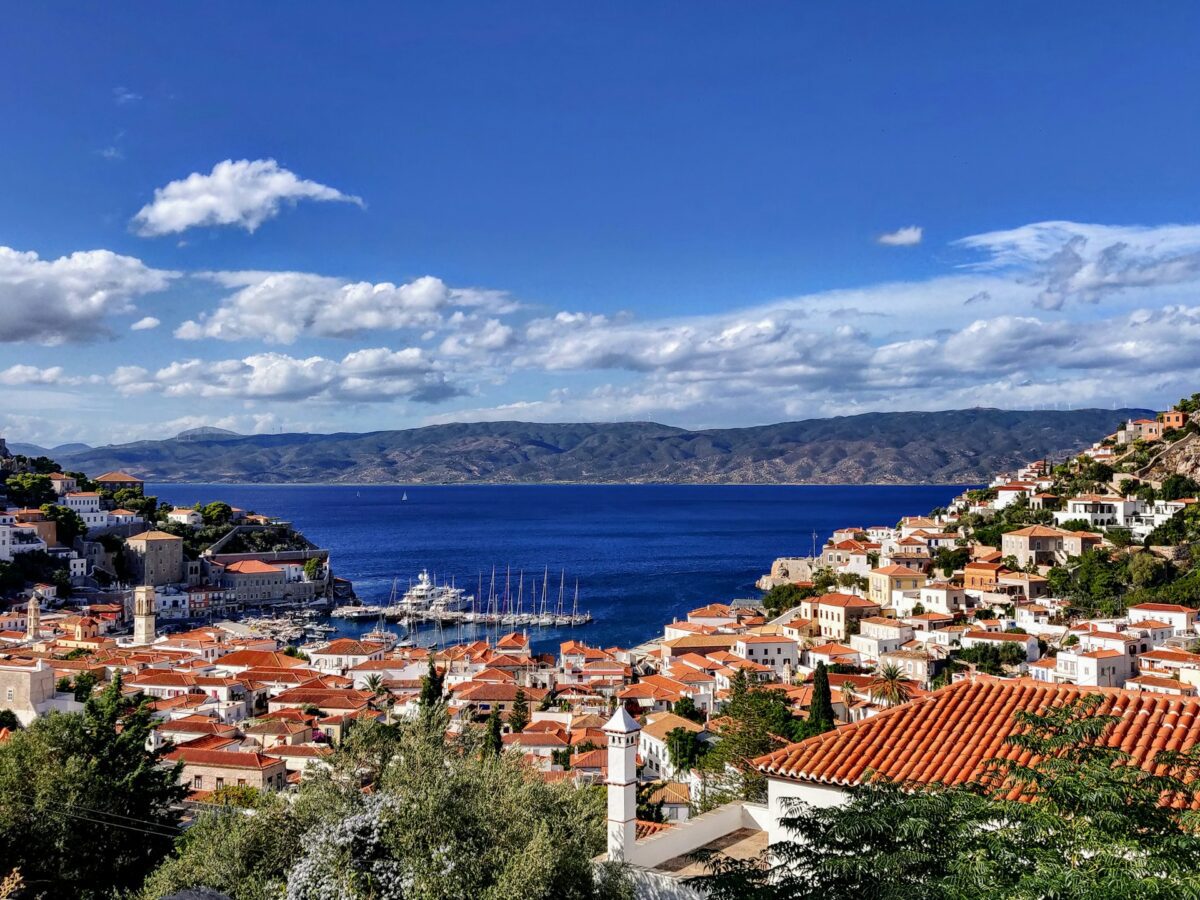
This group of islands is located close to Athens and easily accessible. In fact, most people choose to visit them on a day trip from Athens. They are also the wealthiest of the Greek island groups, particularly the island of Hydra, which has often been the chosen vacation spot of artists and creatives.
Hydra is a car-free island, and you get around mostly by walking.
Eco tip: Please do not ride donkeys in Hydra or anywhere else. Their small bodies can’t handle human weight, and because they have a docile demeanor, many of them are heavily exploited, overworked, and mistreated.
The Saronic Islands consist of:
- Aegina
- Agistri
- Dokos
- Hydra
- Poros
- Salamina
- Spetses
You can expect beautiful beaches at most of them, along with historical architecture.
These islands tend to be sheltered from wind, and travelling by ferry is usually calm and does not generally cause sea sickness.
6. The North Aegean islands
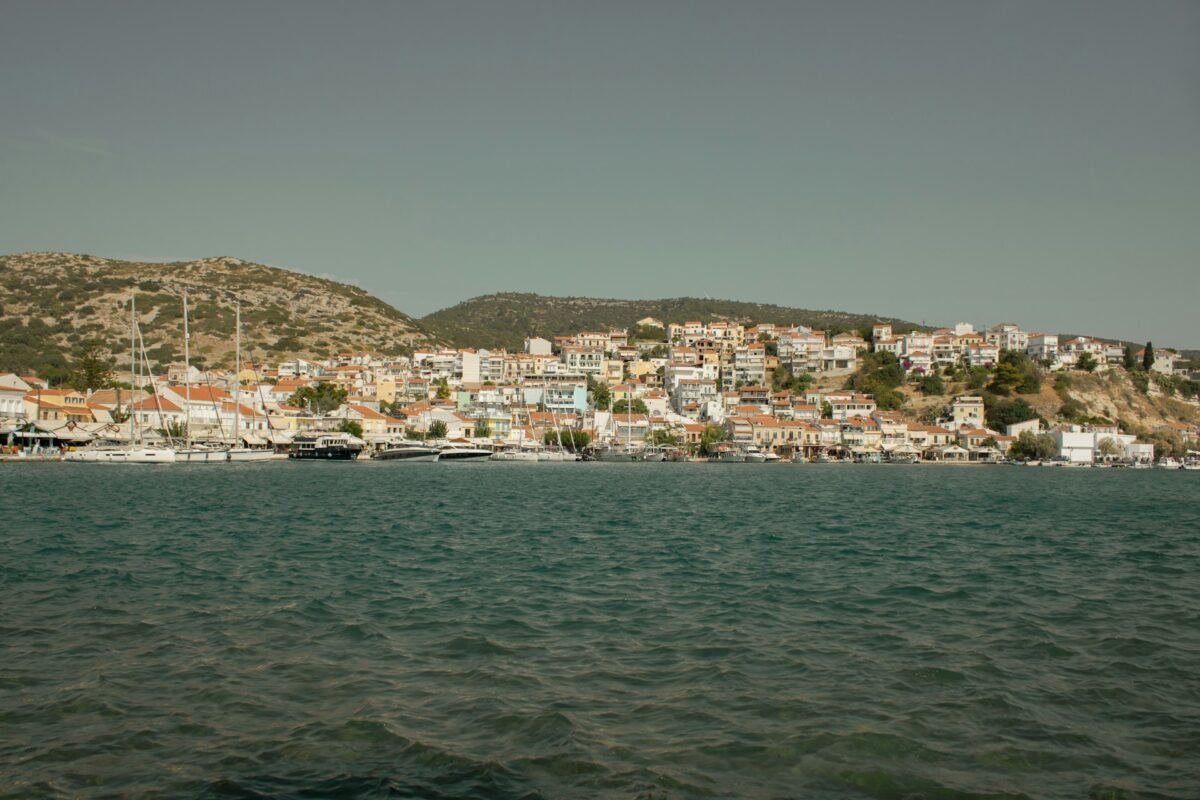
The North Aegean islands are not very popular among tourists, especially compared to the Cyclades, which means they have managed to remain more authentic. Just like the Dodecanese islands, the North Aegean islands are closer to Turkey and Northeast Greece.
The North Aegean islands:
- Chios
- Ikaria
- Lemnos
- Lesbos
- Samos
- Samothrace
- Thassos
The most popular North Aegean islands are Chios, Ikaria, and Samos.
Important things to know about the Greek islands
1. Which Greek islands have airports?
Many popular Greek islands have airports, but most are national airports, meaning you will likely have a stopover in Athens or another international airport if you’re not already in Greece. Also, many of those national flights aren’t direct, and most stop in Athens first.
For trips to islands within the same Greek island groups, it’s best to just take a ferry. Ferries are frequent and more eco-friendly and convenient than flying those short distances.
Greek islands with international airports
- Corfu
- Crete (Heraklion and Chania)
- Karpathos
- Kefalonia
- Kos
- Lemnos
- Lesvos
- Mykonos
- Rhodes
- Samos
- Santorini
- Skiathos
- Zakynthos
Greek islands with national airports
- Chios
- Crete (Lassithi)
- Ikaria
- Kalymnos
- Kythira
- Leros
- Milos
- Naxos
- Paros
- Samos
- Skyros
- Syros
2. Which Greek islands don’t have cruise ships?
Cruise ships are the worst. They pollute the oceans, disturb marine life, and create a lot of waste. Unfortunately, a few of the popular Greek islands have ports where multiple cruise ships dock throughout the day, leading to a surge in visitors who clog up the island, usually between 10 am and 5 pm. Some cruise ships stay for a few nights. Regardless, they’re an unattractive sight, and create a lot of foot traffic.
Greek islands that allow large cruise ships:
- Corfu
- Crete
- Kos
- Mykonos
- Rhodes
- Santorini
- Zakyntos
All the other islands allow only small yachts, or just small ferries and speedboats.
3. Which islands can only be reached by ferry?
As someone who doesn’t love being on boats, but is also trying to limit my environmental impact and avoid flying when possible, planning my Greek itinerary was a tad complicated, especially when you account for time and budget too
Most of the smaller islands can only be reached by ferry as they don’t have airports or bridges connecting to other islands.
The best islands to explore by ferry are the Saronic Islands because of calm seas and being sheltered from the wind. The Ionian Islands are also generally calmer, though this can change depending on the weather. Paxos, for instance, can sometimes suffer from rough seas.
The islands in the Aegean Sea (particularly some North Aegean islands like Chios and the Cycladic islands like Milos and Mykonos) tend to experience rougher seas.
Crete can also experience rough seas.
4. When do the Greek islands close?
Small islands tend to close around late October until late March, but bigger islands, like Crete, Rhodes, and Corfu, usually remain open year-round. It’s best to travel to Greece for its islands in shoulder season (early to mid-October, and April-May) for fewer crowds and to avoid putting stress on the environment and infrastructure.
You will also find better accommodation deals in Santorini and other popular islands in the shoulder season.
Greek island groups: FAQs
- How many Greek islands are there?
There are over 6000 Greek islands, most of which are grouped into 6 Greek island groups. However, only about 227 islands are inhabited.
- Which Greek islands are closest to Athens?
The Saronic islands are the closest to Athens. Aegina is the closest and can be reached from Piraeus by ferry in about 45 minutes. Hydra and Poros are two other popular islands close to Athens, and most people do day trips there, although you can also spend the night for a more relaxing time.
- Which Greek islands should you avoid?
This depends on personal preference. Many people choose to avoid popular and overcrowded ones like Santorini and visit similar ones in the same island group instead, like Naxos. If you’re looking for a party vibe, Mykonos is the one, but for quieter trips, visit any of the other smaller, lesser-known islands.
- Which Greek islands have the best beaches?
Crete, Mykonos, Naxos, Milos, Paros, Corfu, and Paxos are usually cited to have the most beautiful soft sandy beaches, but honestly, there are so many islands in Greece, and the majority have beautiful lagoons. If you’re looking for a “tropical” type of setting, avoid Santorini, known for its black sandy beaches rather than white sandy beaches.